


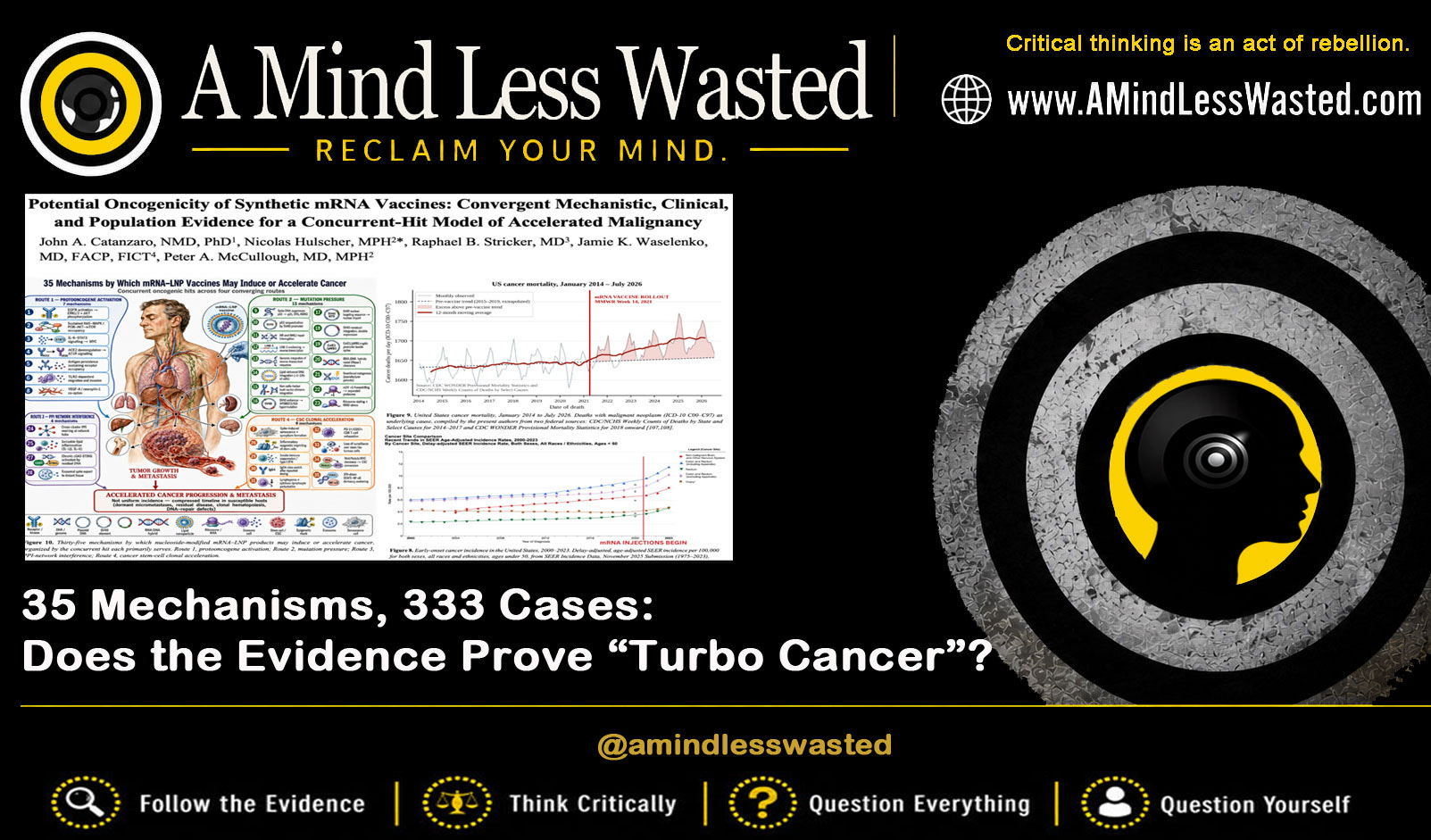
On September 3, 2026, John Catanzaro, Nicolas Hulscher, Raphael Stricker, Jamie Waselenko, and Peter McCullough uploaded a new paper titled Potential Oncogenicity of Synthetic mRNA Vaccines: Convergent Mechanistic, Clinical, and Population Evidence for a Concurrent-Hit Model of Accelerated Malignancy. The accompanying publicity was considerably less tentative.


Caption: Nicolas Hulscher promoted the September 3, 2026 preprint as evidence that “turbo cancer” is real and that mRNA vaccines may induce or accelerate cancer through 35 mechanisms.
Hulscher announced that the question had now been “fully answered,” declaring:
“TURBO CANCER IS REAL.”
The numbers are certainly attention-grabbing: 35 proposed cancer-promoting mechanisms, 333 reported cases across 27 countries, as many as 197,000 excess U.S. cancer deaths, rising early-onset cancers, two large observational studies, and a recently terminated mRNA cancer trial. Put together, it sounds overwhelming.
But before treating all of that as one body of proof, there is a simpler question to ask:
What does each piece actually show?
A plausible biological mechanism is not the same thing as a clinical outcome. A case report is not the same thing as a population-level risk estimate. An association is not the same thing as causation.
That does not make those findings meaningless. It means they have to be weighed according to what they can actually establish.
And that is where the paper’s argument starts to weaken.
First, this is a preprint
As of September 6, Zenodo labels the paper as a preprint. It has a DOI, but a DOI is a permanent identifier, not a certificate of peer review.
That does not make the paper worthless. Plenty of important research appears first as a preprint.
It does mean the paper has not yet gone through the usual peer-review process, where independent reviewers challenge the methods, assumptions, source selection, and whether the conclusions actually match the evidence.
For a paper making claims this consequential, that extra scrutiny matters.
That is particularly relevant here because the paper’s public messaging goes substantially further than much of its underlying literature.
What do “35 mechanisms” actually mean?
The centerpiece is an impressive-looking diagram entitled “35 Mechanisms by Which mRNA-LNP Vaccines May Induce or Accelerate Cancer.” The operative word is may. The authors group molecular phenomena into four broad routes involving oncogenic signaling, mutation pressure, protein-interaction networks, and cancer stem-cell behavior. Some of the underlying biological findings are real and deserve attention.
But “35 mechanisms” can easily be heard as 35 independently demonstrated ways in which vaccination causes cancer. That is not what has been shown. Consider ribosomal frameshifting.
A 2024 Nature paper genuinely demonstrated that N1-methylpseudouridine-containing mRNA can cause +1 ribosomal frameshifting. The researchers also detected immune responses against some resulting frameshifted products in mice and humans following BNT162b2 vaccination.
That is an interesting finding. But the researchers explicitly reported no evidence that those products were associated with adverse outcomes in vaccinated humans. They described the work as important for improving the design and translational fidelity of future mRNA therapies. They did not report cancer, malignant transformation or genomic instability caused by the phenomenon.
The new preprint effectively extends the chain:
frameshifting → novel proteins → immune stress → oncogenic pressure → cancer
The first portion has experimental evidence. The complete chain does not. The same problem appears with LINE-1 reverse transcription.
A widely cited 2022 experiment exposed Huh7 liver cancer cells in culture to BNT162b2 and detected DNA corresponding to vaccine mRNA. The investigators reported evidence of reverse transcription under those laboratory conditions. But reverse transcription is not genomic integration.
Integration is not insertional mutagenesis. And insertional mutagenesis is not cancer. The authors themselves acknowledged that they had not established whether the reverse-transcribed DNA integrated into the cell genome and said additional studies would be necessary.
For the cancer claim to be established, researchers would need to demonstrate something closer to:
vaccine RNA → DNA → chromosomal integration → biologically consequential integration site → altered cellular phenotype → clonal expansion → malignancy
The experiment did not do that. This distinction repeats throughout the “35 mechanisms.” Real molecular findings are frequently followed by one or more hypothetical biological steps and eventually connected to carcinogenesis.
That is a research hypothesis. It is not 35 demonstrations that vaccination produces cancer. The number itself is another problem. Cancer signaling pathways are highly interconnected. STAT3, MYC, NF-κB, inflammatory cytokines, immune surveillance, stem-cell behavior and tumor-microenvironment signaling are not 35 isolated biological systems.
Dividing a network into numerous molecular nodes can produce an impressive count without producing 35 independent causal observations.
Counting pathways is not the same as measuring cancer risk.
Then there are the “333 turbo cancer cases”
This may be the easiest claim to misunderstand.
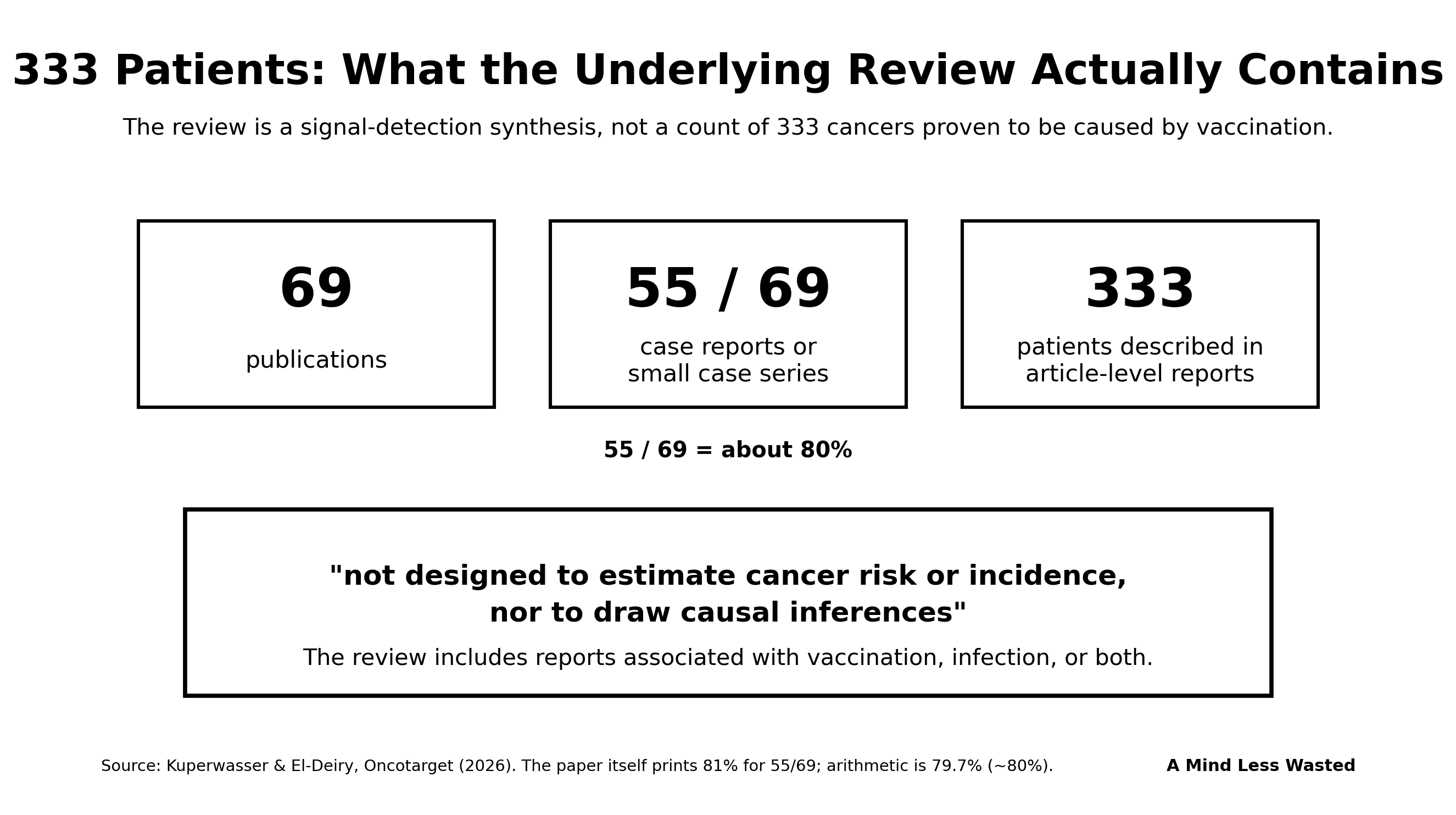
The 333 patients come primarily from a 2026 review by cancer researchers Charlotte Kuperwasser and Wafik El-Deiry published in Oncotarget. The review identified 69 publications. Of those, 66 article-level reports described 333 patients, while the remaining publications included population-level or longitudinal analyses.
Fifty-five of the 69 publications — about 80% — were single-patient case reports or small case series. Importantly, those 333 patients were not 333 cancers proven to have been caused by vaccination. The review included malignancies reported after COVID-19 vaccination, after SARS-CoV-2 infection, and in some patients with both exposures.
And the paper contains an unusually clear warning about what those reports mean. The review states that it:
“was not designed to estimate cancer risk or incidence, nor to draw causal inferences”
The authors characterize the literature as early-stage, hypothesis-generating safety-signal detection requiring much more rigorous investigation. That is very different from saying 333 people developed cancer because of vaccination. Case reports are useful. Medicine has discovered important adverse effects because clinicians noticed unusual events and reported them.
But case reports lack the critical denominator. Suppose 333 cancers were diagnosed following vaccination. Were 33 expected? Three hundred? Three thousand? Without knowing how frequently the same cancers would have occurred in comparable people who were not vaccinated, the number alone cannot answer that question.
Billions of vaccine doses have been administered. In a population that large, cancers, recurrences, heart attacks, strokes, miscarriages and deaths will inevitably occur after vaccination by coincidence. That does not prove none are caused by vaccination. It means “after” cannot by itself establish “because of.”
And that is not my objection imposed on the Kuperwasser-El-Deiry review. It is the limitation stated by the review’s own authors. The new paper takes literature explicitly described as incapable of establishing causation and then uses it as one of the converging pillars supporting the declaration that the causal question has effectively been answered. That is an evidentiary upgrade the source itself does not support.
South Korea: a real signal, but not a causal answer
The South Korean study deserves more attention because, unlike case reports, it actually included a comparison group.
Using a national insurance database covering 8.4 million people, the researchers reported higher one-year rates of several cancers among vaccinated individuals, including thyroid, gastric, colorectal, lung, breast, and prostate cancer.
Those findings are real and should not be dismissed.
But they are still associations. The harder question is whether vaccination caused those differences, and that requires ruling out other explanations such as screening patterns, healthcare use, prior infection, and other sources of bias.
A peer-reviewed methodological critique published in 2026 identified several major problems. Most importantly, vaccinated and unvaccinated people were assigned different index dates: the vaccination date for vaccinated participants versus January 1, 2022 for the unvaccinated. That can create calendar-time bias because the two populations are not entering follow-up under equivalent conditions.
The critique also noted that more than 77% had previous SARS-CoV-2 infection, yet the study did not perform the sensitivity analysis necessary to separate that exposure adequately. Important variables such as smoking, alcohol use, family history, genetic susceptibility and screening frequency were unavailable.
South Korea also has extensive national cancer-screening programs. If vaccinated people interact with the healthcare system differently from unvaccinated people, previously existing cancers can be detected at different rates. That is surveillance bias.
Thirty cancer-site and subgroup comparisons were also conducted without adjustment for multiple testing, increasing the likelihood that some statistically significant findings appear by chance. The new preprint attempts to address the short one-year latency by arguing that vaccination may accelerate an already existing microscopic cancer, rather than create a solid tumor from nothing.
That hypothesis cannot simply be dismissed on latency grounds. But it makes the epidemiological problem even harder, because a one-year increase in detection of previously occult tumors is exactly the situation in which differences in healthcare utilization and cancer screening become especially important.
The Korean study is therefore worth replicating with better causal methods. It is not proof that vaccination caused those cancers.
Italy: the missing half of the result
The Italian study involved 296,015 residents of Pescara province. Its headline finding is accurately quoted by Hulscher: people receiving at least one vaccine dose had an adjusted hazard ratio of 1.23 for cancer hospitalization compared with unvaccinated residents. But there is an important result missing from the viral summary.
When the researchers required at least 12 months between vaccination and cancer hospitalization, the association reversed direction. It was also significant only among people without documented previous SARS-CoV-2 infection. The study’s own authors describe their cancer findings as preliminary, citing healthy-vaccinee bias and unmeasured confounding that they could not quantify. Cancer hospitalization is also not the same thing as newly developed cancer. A hospitalization database can capture diagnosis, treatment, recurrence, and healthcare-use differences.
None of this means the original HR of 1.23 should be ignored. But presenting the 1.23 while omitting the reversal under a longer latency analysis creates a considerably stronger impression than the study itself warrants.
The “197,000 excess cancer deaths” claim has a much bigger problem
This is where the paper’s population argument becomes most vulnerable.
Look carefully at its U.S. mortality figure. The vertical axis is “cancer deaths per day.”
Those are raw counts. They are not age-adjusted cancer mortality rates.
That distinction matters because the U.S. population is both growing and aging. Since cancer risk rises steeply with age, the total number of cancer deaths can increase even while the age-adjusted cancer mortality rate declines.
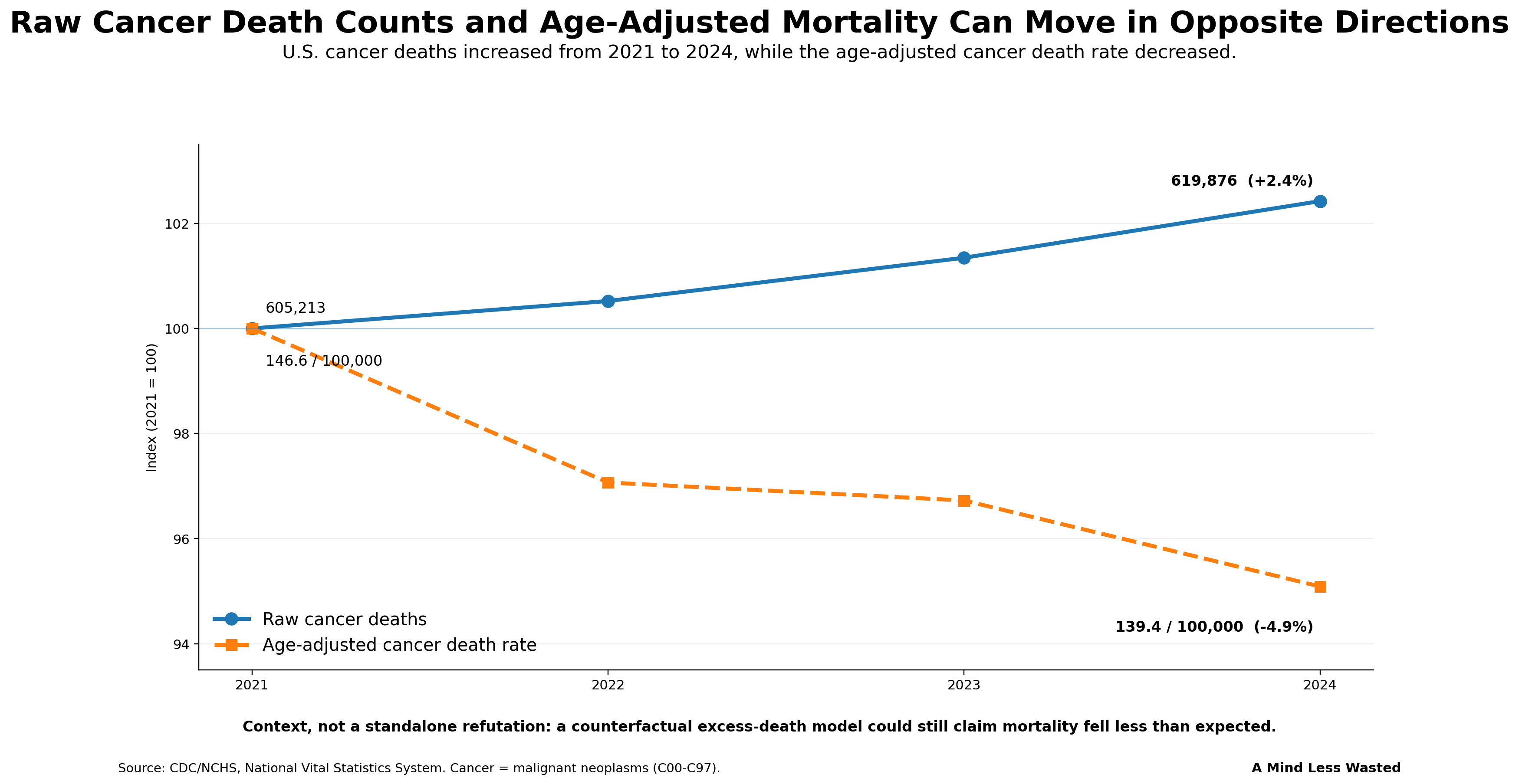
Official CDC final mortality statistics show:
2021: 146.6 deaths per 100,000
2022: 142.3 deaths per 100,000
2023: 141.8 deaths per 100,000
2024: 139.4 deaths per 100,000
The age-adjusted cancer mortality rate fell 2.9% from 2021 to 2022, was essentially unchanged from 2022 to 2023, and then fell another 1.7% in 2024.
Here is why raw counts can be misleading.
Cancer deaths increased from 613,352 in 2023 to 619,876 in 2024.
Yet during the same period, the age-adjusted cancer mortality rate fell from 141.8 to 139.4 per 100,000.
So both statements are true at the same time:
More people died of cancer in absolute numbers.
The age-adjusted cancer death rate declined.
This does not, by itself, invalidate every counterfactual excess-death model. A model could still argue that cancer mortality declined less than would have been expected in the absence of some additional exposure.
But the official age-adjusted data establish something narrower and important:
U.S. cancer mortality did not surge after 2021. It continued declining overall.
A rising raw-death curve therefore cannot, by itself, be interpreted as evidence of an emerging cancer hazard unless population size, age structure, and the expected baseline trend are handled properly.
And even if an excess above a statistical forecast were established, another enormous step remains:
What caused the excess?
A time-series change occurring after vaccination cannot independently distinguish vaccination from SARS-CoV-2 infection, delayed diagnosis, disrupted cancer treatment, demographic shifts or other pandemic-era effects. The National Cancer Institute’s 2025 Annual Report to the Nation, produced jointly with CDC, ACS and NAACCR, found that overall cancer mortality continued declining through 2022. That is extraordinarily difficult to reconcile with the public characterization of a massive nationwide vaccine-driven cancer mortality catastrophe.
It does not exclude a signal in a particular cancer, age group or susceptible subgroup. It does mean that 119,000 to 197,000 “vaccine-caused cancer deaths” has not been demonstrated.
What about the increase in early-onset cancers?
Here again, there is a genuine problem wrapped in an unjustified causal interpretation. Overall early-onset cancer incidence, and several important cancer types, really are increasing. But those trends were already present before anyone received a COVID-19 vaccine.
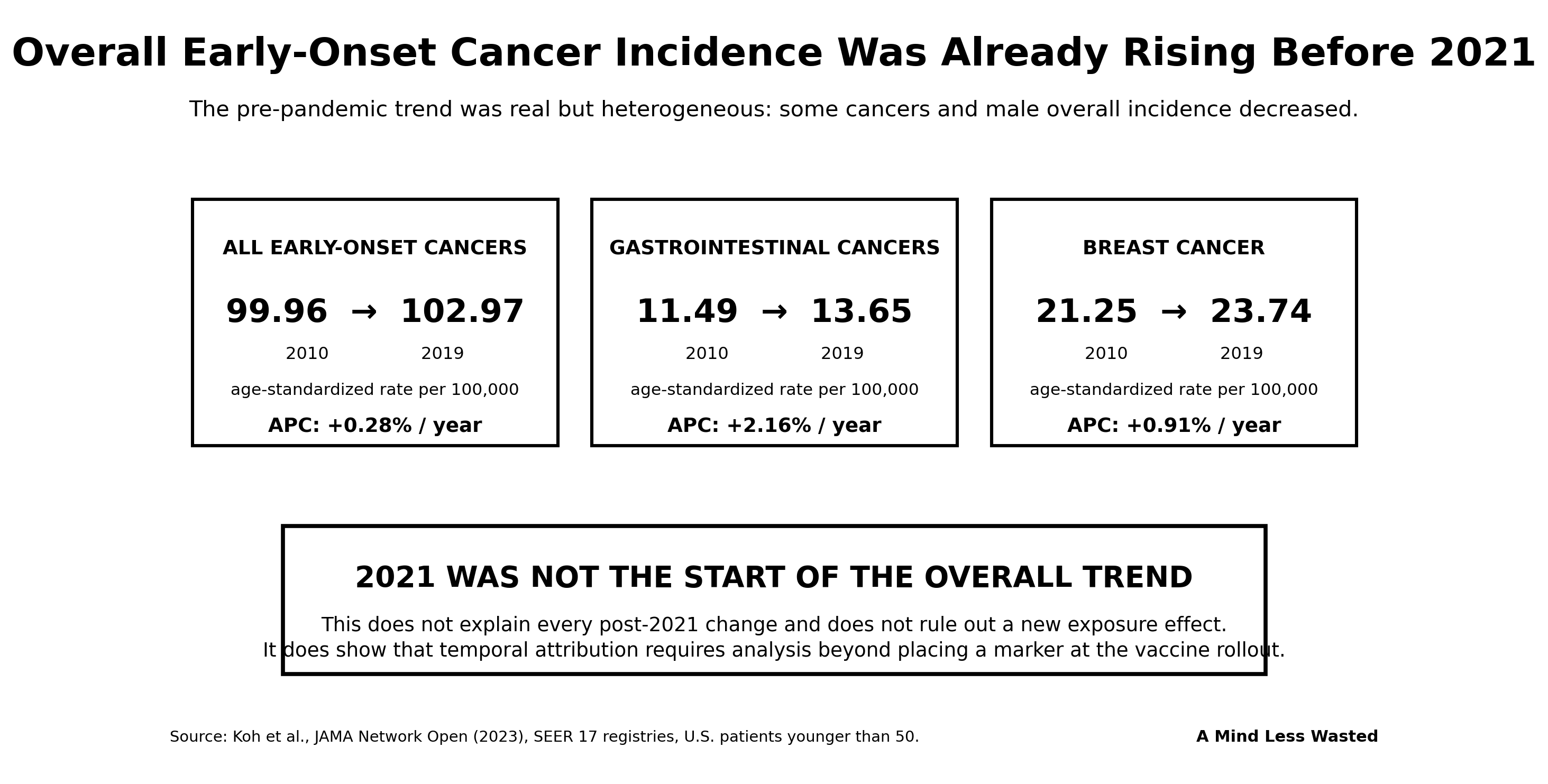
A large SEER analysis published in JAMA Network Open examined Americans younger than 50 from 2010 through 2019. Overall early-onset cancer incidence increased significantly during that period, with particularly rapid growth in gastrointestinal cancers. The pattern was not uniform: incidence declined among men overall and for several individual cancer sites. That matters when a graph places a bright red line at 2021 labeled “mRNA INJECTIONS BEGIN.” A vertical line is not a causal model.
There was also a major pandemic disruption in cancer diagnosis. NCI reports that cancer incidence fell sharply in 2020 as screening and routine medical care were disrupted, then largely returned toward pre-pandemic levels in 2021. Importantly, NCI researchers found little evidence of a compensatory rebound large enough to account for all of the diagnoses missed in 2020. So pandemic disruption should not be offered as a complete explanation for subsequent cancer trends. It does, however, make comparisons anchored around 2020 and 2021 unusually difficult to interpret.
SEER contains extraordinarily useful information about cancer trends. But placing the vaccine rollout date onto an ecological incidence graph does not convert SEER into a vaccinated-versus-unvaccinated study. The registry does not establish that the individuals responsible for the increase were vaccinated, when they were vaccinated, which vaccine they received or whether the trend differed appropriately according to dose. The graph is therefore a hypothesis generator, not a causal test.
One finding I would not dismiss: the LNP mouse study
There is, however, one new piece of evidence in this discussion that deserves serious follow-up. A 2026 study in Nano Today reported that lipid nanoparticles used experimentally in mice could create inflammatory conditions favoring pulmonary metastasis.
The researchers did not administer a licensed Pfizer or Moderna COVID-19 vaccine. They prepared experimental LNP formulations containing ALC-0315, an ionizable lipid used in Pfizer’s vaccine formulation, along with other lipid components, and tested them in mouse tumor models.
The researchers found that LNP injection caused local muscle injury and release of mitochondrial DNA, followed by neutrophil activation and formation of neutrophil extracellular traps. In their experimental mouse metastasis model, this environment facilitated establishment of tumor cells in the lungs. That is a legitimate preclinical finding that warrants replication and further safety investigation. It should be replicated.
It should be tested with different LNP formulations, clinically relevant exposures and doses, different cancer models, animals with spontaneous or preexisting tumors, and ultimately compared against carefully designed human epidemiology. But notice what the experiment did not establish.
It did not show that COVID vaccination initiates human cancers. It did not demonstrate increased metastatic disease among vaccinated people. It did not establish that every LNP formulation behaves identically.
And a mouse experimentally challenged with tumor cells is not equivalent to a person receiving an intramuscular vaccine. Calling the finding irrelevant would be unreasonable. Calling it proof of a human “turbo cancer” epidemic would be equally unreasonable.
Science lives in the distance between those two statements.
The failed BioNTech cancer trial
Finally, there is the recently terminated BNT122-01 trial. Unlike most of the material being discussed, this actually was randomized. BioNTech was testing autogene cevumeran, an individualized mRNA neoantigen treatment, in patients with high-risk colorectal cancer who had undergone surgery but still had circulating tumor DNA.
The trial crossed its prespecified futility boundary and was ultimately terminated. Its futility boundary was crossed in October 2025. At that point the independent Data Safety Monitoring Board concluded that the efficacy data were immature and follow-up insufficient.
With no identified safety concerns and no objection from the DSMB, BioNTech chose to continue the trial. In August 2026, the DSMB subsequently observed a numerical imbalance in overall survival, concluded that continued enrollment was unlikely to change the efficacy outcome, and recommended termination.
But BioNTech’s regulatory disclosure also states:
“No new safety signals were identified by the DSMB regarding autogene cevumeran.”
That doesn’t make the survival imbalance unimportant. I want to see the complete data: deaths by treatment arm, causes of death, recurrence, disease progression, confidence intervals, baseline characteristics, and duration of follow-up.
Until those results are available, however, there is a major difference between:
“An mRNA cancer treatment failed, and a numerical survival imbalance emerged.”
and
“The mRNA treatment accelerated cancer and killed patients.”
Only the first statement is presently established. And an individualized cancer immunotherapy encoding patient-specific tumor antigens is not biologically interchangeable with a COVID vaccine merely because both employ mRNA and lipid delivery.
What evidence would actually settle this?
If the concurrent-hit hypothesis is correct, it is testable. The most informative next steps would be:
Large exposure-linked cohorts comparing vaccinated and unvaccinated people with equivalent calendar-time entry, healthcare utilization, screening history, SARS-CoV-2 infection history and established cancer risk factors.
Prespecified analyses of cancer recurrence and progression in people who already had cancer, where an “acceleration” hypothesis can be tested more directly than new cancer incidence.
Dose-response and timing analyses using exact vaccination dates and products rather than ecological state-level vaccination rates.
Replication of the LNP metastasis experiments across formulations and clinically relevant dosing, followed by prospective translational studies.
Molecular evidence in tumors demonstrating the proposed pathway linking a particular exposure to the malignant clone, rather than simply showing that a cancer appeared sometime afterward.
If those studies produce a reproducible signal, it should be taken seriously regardless of how politically inconvenient the result might be. If they do not, the hypothesis should weaken accordingly. That is how a falsifiable scientific claim is supposed to work.

Are We Making the Opposite Mistake?
Rejecting the claim that this paper proves an mRNA-driven cancer epidemic does not prove that mRNA vaccines can never influence cancer biology.
Some findings deserve serious follow-up. The Korean study reported associations that should be replicated with better controls. The Italian study produced an initial cancer-hospitalization signal.
The LNP mouse experiment raised a legitimate question about metastatic environments. And the BNT122 survival imbalance deserves examination when the full trial data are released.
So the correct response is not:
“There is absolutely nothing here.”
It is:
“There is not enough here to justify the causal conclusion being claimed.”
That distinction matters. If future well-designed studies show reproducible increases in cancer incidence, recurrence, or progression tied to vaccination, especially with dose-response, appropriate latency, individual exposure data, and biological corroboration, the conclusion should change. But scientific skepticism has to work both ways.
We should not dismiss a signal because we dislike its implications. And we should not promote a signal into proof because we like its implications.
The question is not whether the hypothesis is uncomfortable. The question is whether the evidence has earned the conclusion.
What the paper actually establishes
The paper succeeds at one thing: it assembles a large number of questions that deserve investigation. It does not establish the answer claimed in the publicity surrounding it. Some molecular phenomena are real.
The cancer case reports are real. The Korean statistical associations are real. The initial Italian HR is real.
Overall early-onset cancer incidence and several important cancer types really are increasing. The LNP mouse metastasis finding is real. And the BioNTech colorectal trial crossed its futility boundary and was terminated.
None of those facts requires denial or minimization. But the causal chain connecting them remains unproven.
The recurring transformation is:
biological possibility → temporal observation → statistical association → causal conclusion
The first three can justify investigating the fourth. They cannot simply substitute for it. This distinction is especially important because the authors call for immediate market withdrawal of nucleoside-modified mRNA-LNP products from broad preventive use and a halt to their expansion into adjuvant and neoadjuvant cancer treatment. That recommendation requires evidence commensurate with its magnitude. The preprint does not provide it.
There is a perfectly defensible scientific position between “mRNA technology could never affect cancer biology” and “turbo cancer has now been proven.”
It is this:
There are specific mechanistic and epidemiological signals worth testing rigorously, but the available evidence does not establish that COVID-19 mRNA vaccines are causing or accelerating a population cancer epidemic.
Thirty-five proposed routes are not 35 proven cancer mechanisms.
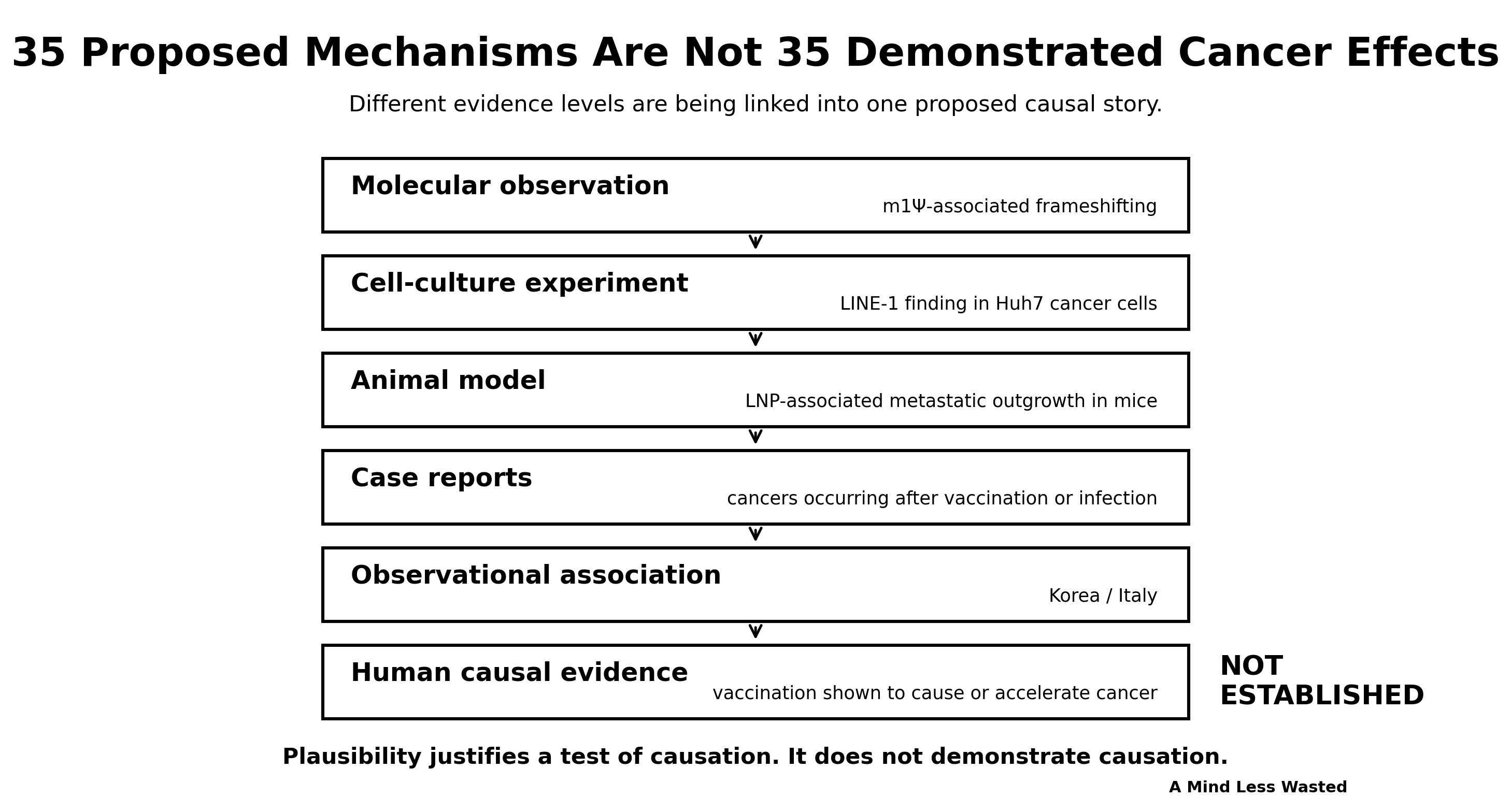
Three hundred thirty-three temporally associated cases are not 333 causally attributed cases. A rising raw cancer-death count is not the same thing as a rising age-adjusted cancer mortality risk. And a failed mRNA cancer trial does not retrospectively prove that COVID vaccines cause cancer.
The new paper has assembled a research agenda.
It has not “fully answered” the question.
Resources & Further Reading
For readers who want to examine the evidence directly, these are the primary papers, datasets, and methodological critiques discussed in this article.
The paper being evaluated: Catanzaro JA, Hulscher N, Stricker RB, Waselenko JK, McCullough PA. Potential Oncogenicity of Synthetic mRNA Vaccines: Convergent Mechanistic, Clinical, and Population Evidence for a Concurrent-Hit Model of Accelerated Malignancy. Zenodo, 2026. Read the Zenodo preprint
Cancer case-report literature: Kuperwasser C, El-Deiry WS. Review of reported cancers following COVID-19 vaccination and infection. Oncotarget, 2026. Particularly important because the authors explicitly caution that their review cannot estimate cancer incidence or establish causation. Read the Oncotarget review
mRNA frameshifting: Mulroney TE et al. Research demonstrating that N1-methylpseudouridylation can produce unintended ribosomal frameshifting. Nature, 2024. The study demonstrated altered translation but did not demonstrate cancer or adverse clinical outcomes from the phenomenon. Read the Nature study
LINE-1 / reverse-transcription experiment: Aldén M et al. Intracellular Reverse Transcription of Pfizer BioNTech COVID-19 mRNA Vaccine BNT162b2 In Vitro in Human Liver Cell Line. Current Issues in Molecular Biology, 2022. This was an in-vitro experiment in Huh7 cancer cells and did not establish genomic integration in vaccinated humans. Read the study
South Korean cancer study: Kim H et al. 1-year risks of cancers associated with COVID-19 vaccination: a large population-based cohort study in South Korea. Biomarker Research, 2025. The study reported positive associations for several cancers but cannot by itself establish causation. Read the study on PubMed Central
Methodological critique of the Korean study: A subsequent analysis discusses index-date differences, surveillance bias, residual confounding, prior infection, multiple comparisons, and the difficulty of interpreting cancers diagnosed within a short latency period. Read the methodological critique
Italian population study: The Pescara cohort reported an initial HR of 1.23 for cancer hospitalization among vaccinated residents, while longer-latency analyses changed the result and the authors emphasized substantial limitations and possible confounding. Read the Italian study
Early-onset cancer trends before COVID vaccination: Koh B et al. analyzed SEER data showing that several early-onset cancers were already increasing during 2010–2019. JAMA Network Open, 2023. Read the SEER analysis
U.S. cancer mortality: CDC/NCHS final mortality statistics provide age-adjusted cancer death rates alongside raw death counts. CDC 2024 mortality statistics
Pandemic-era cancer diagnosis: NCI analyses document the sharp decline in new diagnoses during 2020 and the return toward pre-pandemic levels in 2021, while finding little evidence of a compensatory rebound large enough to recover all missed diagnoses. NCI pandemic diagnosis analysis
National cancer trends: The National Cancer Institute’s Annual Report to the Nation on the Status of Cancer tracks incidence and mortality using population-standardized methods and documents the continuing long-term decline in overall U.S. cancer mortality. NCI Annual Report to the Nation
LNP and metastasis experiment: The 2026 Nano Today study reporting increased metastatic establishment in a mouse model following particular lipid-nanoparticle exposures is one of the more important preclinical findings discussed in the article and warrants independent replication. Read the Nano Today study
BNT122/autogene cevumeran trial: BioNTech’s August 2026 company disclosure describes termination of the Phase 2 colorectal-cancer trial after futility and a numerical overall-survival imbalance, while also reporting that the independent DSMB identified no new safety signal related to the treatment. Full peer-reviewed trial results were not yet available when this article was written. Read BioNTech’s trial update
A note on how to read these sources
Readers should distinguish between mechanistic plausibility, cell experiments, animal studies, case reports, observational associations, and causal evidence in humans. Each can contribute useful information, but they answer different questions and carry very different evidentiary weight. That distinction is the central issue examined in this article.