


Two children dying unexpectedly is a tragedy. It is also exactly the kind of event that demands restraint, complete records, and careful forensic investigation—not an immediate declaration of causation.
In June 2025, physician Pierre Kory published an article claiming that routine childhood vaccines caused the deaths of 18-month-old twins Dallas and Tyson Shaw. He expanded that case into a broader argument that vaccines cause most cases of sudden infant death syndrome (SIDS) and may have killed hundreds of thousands of American infants.
Those are extraordinary claims.
Some of the events, quotations, and studies Kory cites are real. Vaccines can cause adverse reactions, including rare serious ones, and reports of illness or death after vaccination deserve careful investigation.
But acknowledging those facts does not mean every event following vaccination was caused by it. The central question is whether Kory’s evidence supports his conclusions.
In my assessment, it does not.
What happened to the Shaw twins?
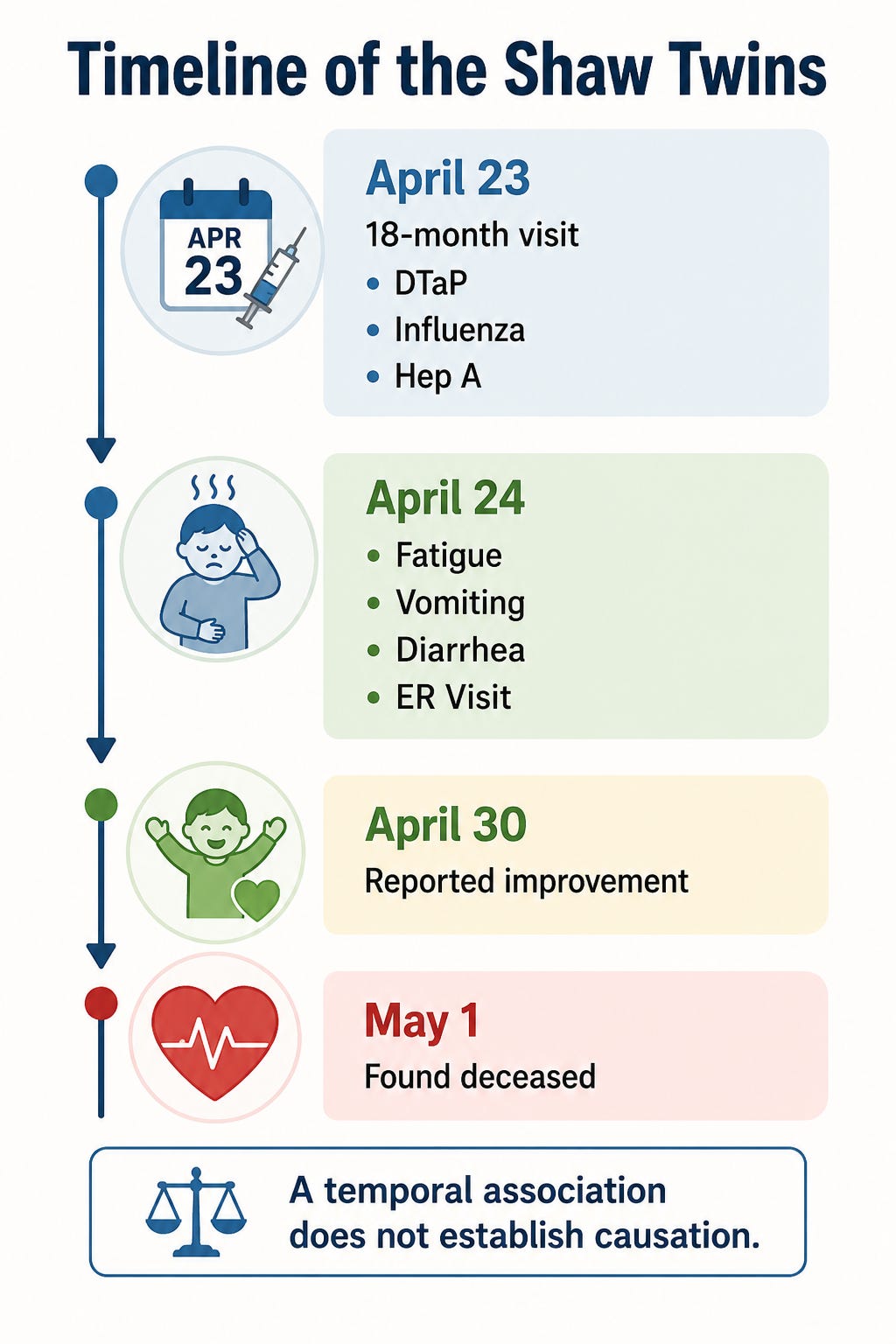
According to Kory, Dallas and Tyson Shaw were born prematurely at 29 weeks and required extended neonatal care. At 18 months, they received DTaP, influenza, and hepatitis A vaccines during a wellness visit.
Their mother said both became unusually tired the next day, developing diarrhea, vomiting, poor appetite, and signs of dehydration. They were evaluated in the emergency department, where a vaccine reaction and viral illness were reportedly considered. Although their symptoms persisted for several days, their mother said they appeared much better on April 30.
The following morning, May 1, 2025, both children were found dead. Kory concluded they died from vaccine-induced apnea, brain inflammation, and microscopic blood clotting.
The reported illness raises legitimate questions about their medical evaluation and follow-up. However, it does not establish the cause of death.
Kory states that he obtained medical records and quotes portions of them, but he does not provide the complete records, autopsy, toxicology, laboratory findings, or full investigative record for independent review. Nor does he present pathological evidence supporting brain inflammation, microstrokes, blood "sludging," or fatal apnea. As presented, the evidence in the article is insufficient for readers to independently verify his interpretation or determine that vaccination caused the twins' deaths.
There has also been a major development since the article was published. In June 2026, a grand jury indicted the twins’ mother, Andrea Shaw, on two counts of first-degree murder, alleging she suffocated the children. Shaw denies the charges, and an indictment is not a conviction. Regardless of the outcome, the later indictment illustrates why it was premature to conclude that vaccination caused the deaths before the forensic investigation was complete. (AP News)
Some supporters have argued that the later homicide investigation was fabricated to conceal vaccine-related deaths. At present, there is no publicly available evidence supporting that allegation. Like the vaccine-causation claim, it should not be accepted without evidence.
These deaths were not SIDS
Kory repeatedly connects the Shaw twins to SIDS. That terminology is incorrect.
SIDS is the unexplained death of an infant younger than one year after a complete investigation, including an autopsy, review of the clinical history, and examination of the death scene. Dallas and Tyson were 18 months old. Whatever ultimately caused their deaths, they were outside the age definition of SIDS. (CDC)
A sudden unexplained death after the first birthday may be classified under other terms, including sudden unexplained death in childhood, depending on the circumstances and findings.
This is more than a technical distinction. Kory uses research involving young infants—primarily babies in the first several months of life—to explain the deaths of toddlers with a different medical history.
Does the timing prove the vaccines caused their illness?
No. It establishes a temporal association.
Some routine vaccines can cause short-lived fever, fatigue, irritability, decreased appetite, or local discomfort. It is therefore possible that at least some of the twins’ initial symptoms were related to vaccination.
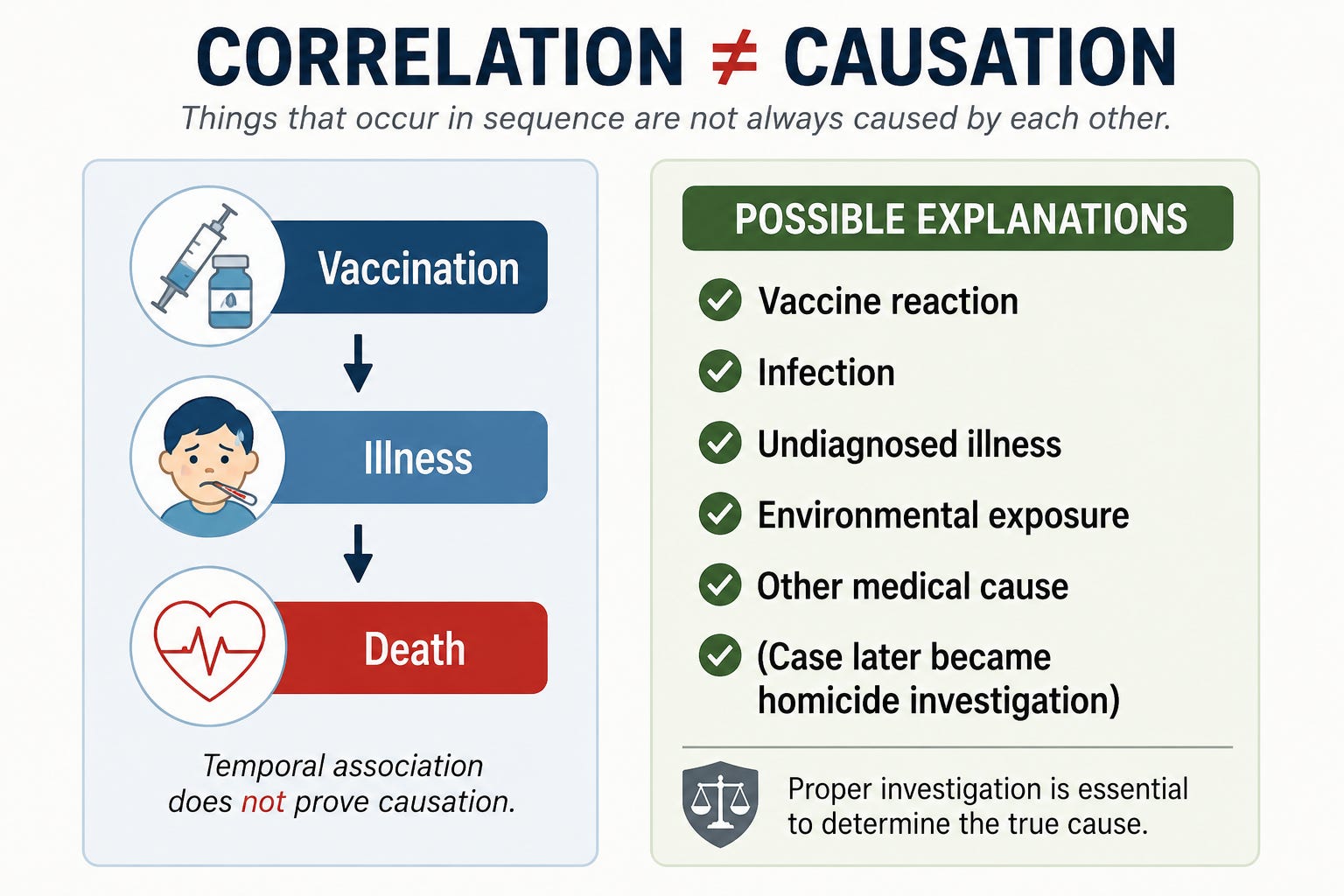
It is also possible that they had an infectious gastrointestinal illness, another shared exposure, or a separate medical condition. Their prolonged diarrhea and vomiting are not unique signatures of vaccine injury.
The fact that both children became ill after receiving vaccines makes the event worthy of reporting and investigation. But “after” does not automatically mean “because of.”
This distinction matters because large numbers of children receive vaccines every year. Some illnesses, seizures, and deaths will occur shortly afterward by coincidence. Establishing causation requires comparing the observed number of events with the expected background number and examining clinical and forensic evidence.
What about reports of twins dying after DTP vaccination?
Kory cites several historical case reports describing twins who died hours or days after receiving older diphtheria, tetanus, and pertussis vaccines.
These reports are real and deserve investigation, but case reports are designed to identify potential safety signals—not establish causation. They lack control groups and cannot show how often similar vaccinations occurred without the same outcome.
In one report, the author concluded that some sudden deaths would be expected to occur by coincidence because vaccination and unexplained infant deaths were both common during the same age period. Kory dismisses this by suggesting the author was “brainwashed” or pressured to reach that conclusion.
That is not a scientific rebuttal. A valid critique would identify flaws in the data, methodology, or statistical analysis, not speculate about the author’s motives.
Other reports Kory cites also considered environmental factors, such as shared sleeping conditions, and did not conclude that vaccination caused the deaths.
Do vaccines cause SIDS?
The best available epidemiological evidence has not demonstrated that routine childhood immunization increases the risk of SIDS.
One major cooperative study examined 757 infants classified as definite or probable SIDS cases and compared them with 1,514 matched controls. The infants who died were less likely to have received DTP vaccination, and the researchers found no temporal association between DTP vaccination and SIDS. (PubMed)
A 1996 meta-analysis combining cohort and case-control evidence found no increased SIDS risk during the first 30 days after DTP immunization. The pooled risk comparing recently vaccinated infants with those vaccinated more than 30 days earlier was 1.00, indicating no detectable difference. (PubMed)
A later German case-control study involving 307 SIDS cases and 971 controls also found no increased risk during the 14 days after immunization. (PubMed)
A 2012 reanalysis of three case-control studies similarly found no increased or reduced risk of sudden infant death during post-vaccination periods. (PubMed)
Some studies have found lower SIDS rates among vaccinated children. That does not necessarily mean vaccines directly prevent SIDS. Children who are acutely ill or medically fragile may have their vaccinations postponed, producing what researchers call a healthy-vaccinee effect. The safest conclusion is that the evidence does not support an increased risk.
CDC’s current summary states that multiple studies and safety reviews have found no causal link between childhood vaccination and SIDS. (CDC)
The apnea graph does not prove fatal breathing failure
Kory presents a graph that he says shows breathing disturbances surging after pertussis vaccination. He interprets its vertical scale as representing thousands of episodes in which breathing nearly or completely stopped. He then connects a later peak in the graph to the Shaw twins’ deaths on approximately Day 7.
There are several problems with that interpretation.
The graph appears to represent a proprietary, weighted apnea-and-hypopnea score from a monitoring device, not a simple count of thousands of medically confirmed episodes of complete breathing cessation. It appears to describe an individual child rather than a large controlled study.
A single child’s monitoring trace cannot establish that vaccination generally produces a predictable Day 5-to-Day 7 wave of fatal apnea.
More importantly, Kory supplies no monitoring evidence showing that the Shaw twins experienced apnea. He also presents no autopsy evidence of brainstem ischemia, microclots or neuroinflammation.
The proposed sequence, vaccination, inflammation, blood clumping, brainstem microstrokes and simultaneous fatal apnea, is speculative. Kory even suggests that the proposed early and late mechanisms might have occurred in the reverse order. That level of uncertainty is incompatible with his confident assertion that he identified the cause of death.
Why the VAERS numbers do not prove a mortality wave
Kory relies heavily on an analysis of infant deaths reported to the Vaccine Adverse Event Reporting System. The paper found that many reports occurred within several days after vaccination. Kory interprets this clustering as evidence of vaccine-induced death.
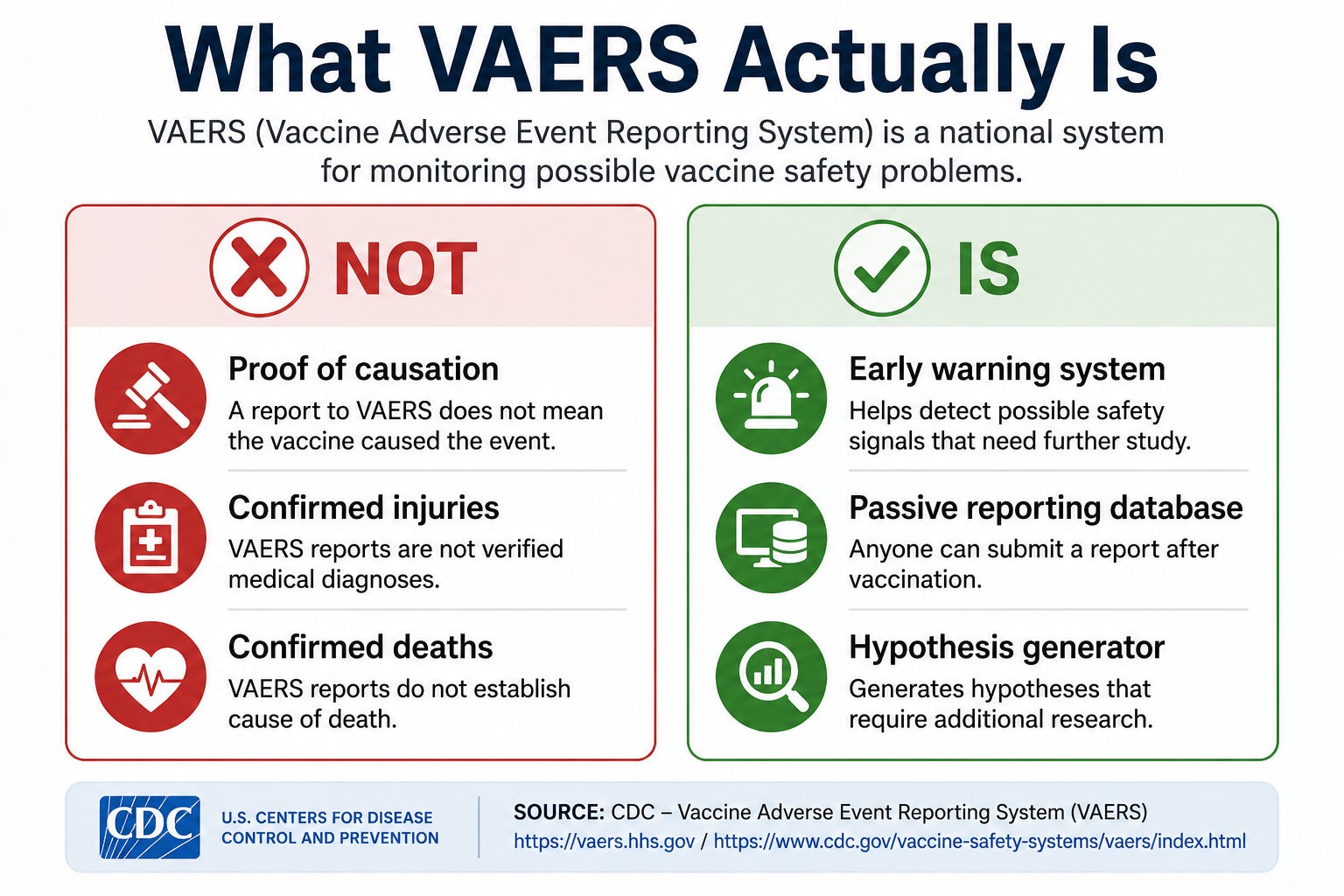
VAERS is an important early-warning system jointly managed by CDC and FDA. It accepts reports of medical events occurring after vaccination even when the reporter is unsure whether the vaccine caused them.
That openness is a strength because it can detect unusual reporting patterns quickly. It is also why raw VAERS reports cannot be treated as verified injuries.
CDC explicitly states that a report to VAERS does not mean a vaccine caused the event. Reports can be incomplete, coincidental, inaccurate, or unverifiable. VAERS generally lacks an appropriate unvaccinated comparison group and often cannot be used to calculate how frequently an event occurs. (CDC)
Events occurring soon after vaccination are also more likely to be reported than events occurring weeks later. CDC’s surveillance manual identifies this as biased or stimulated reporting. Serious events may be reported more consistently than minor ones, but even a death report does not establish causation. (CDC)
Therefore, a concentration of VAERS reports in the first several days can reflect reporting behavior as well as biology. To determine whether deaths actually occur above the expected background rate, researchers need controlled systems such as the Vaccine Safety Datalink, linked medical records or well-designed cohort and case-control studies.
Those stronger study designs have not supported Kory’s claim that vaccines cause most SIDS.
The “10,000 infant deaths per year” calculation
Kory makes his most dramatic quantitative claim near the end of the article.
He begins with approximately 3,000 infant death reports submitted to VAERS over roughly 30 years, or about 100 reports annually. He then cites a general claim that fewer than 1% of vaccine adverse events are reported. He multiplies the 100 annual reports by 100 and concludes that vaccines may kill 10,000 infants per year.
He then multiplies that number by 30 years and asserts that vaccines killed 300,000 infants.
This calculation is invalid.
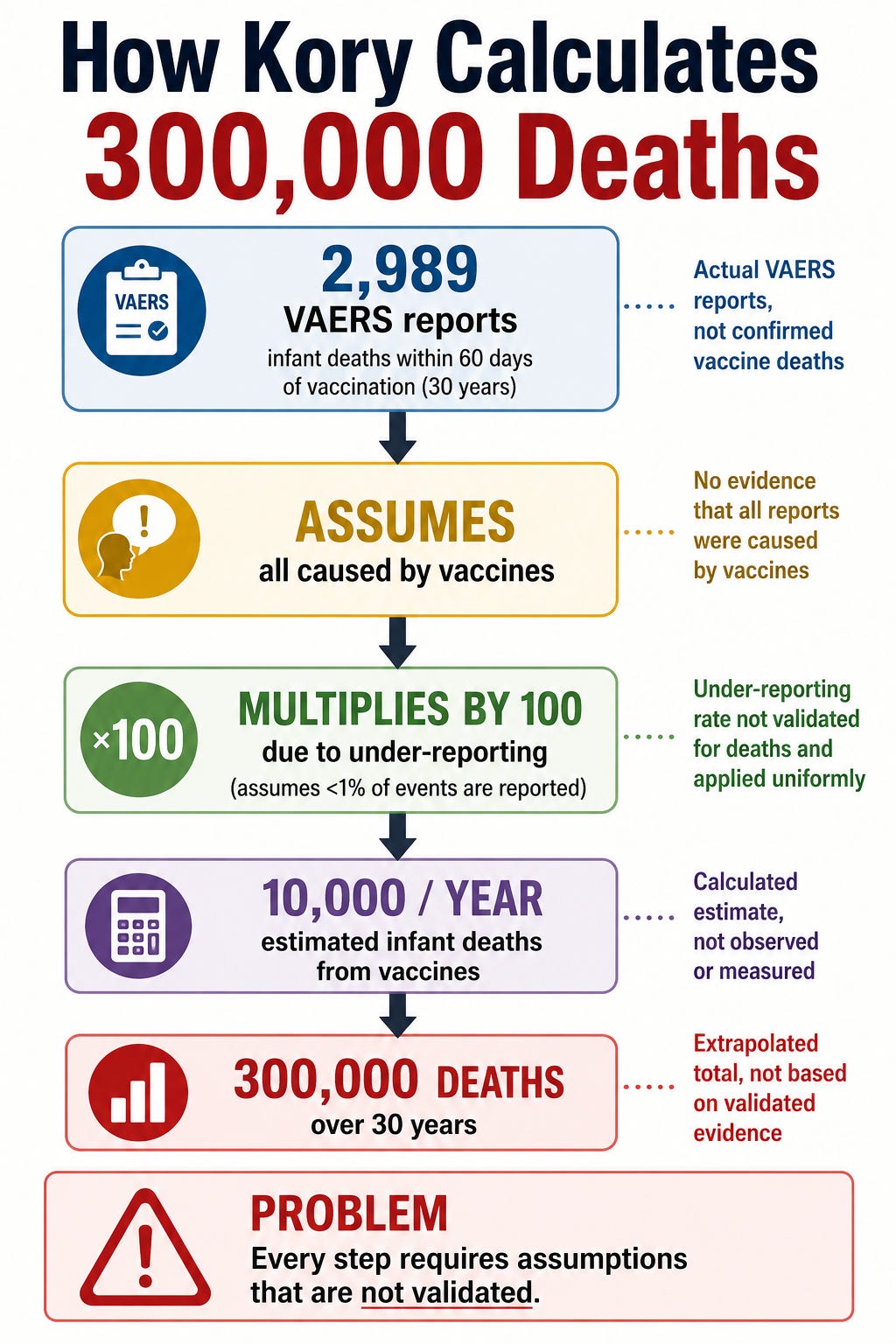
First, the VAERS entries are reports of deaths following vaccination, not confirmed vaccine-caused deaths.
Second, underreporting is not uniform across every type of event. Mild fever or arm soreness is far less likely to be reported than hospitalization or death. A broad underreporting estimate involving all possible events cannot simply be applied to fatalities.
Third, VAERS contains no comparison showing that the reported deaths exceeded the number expected from ordinary infant mortality.
Kory’s 300,000 figure is therefore not an observed number, a confirmed count or a credible epidemiological estimate. It is the product of multiplying one uncertain number by another inapplicable number.
The Sa’Niya Nelson case
Kory also recounts the death of one-year-old Sa’Niya Nelson, who reportedly became critically ill within hours of a catch-up vaccination visit.
The account describes seizures, cardiac arrest and an extremely high blood glucose level. Those are serious findings, and the close timing deserves investigation.
But the article does not provide the complete vaccination record, hospital chart, laboratory findings, autopsy, toxicology, or official cause of death. It is therefore impossible to determine from Kory’s narrative whether vaccination caused the medical crisis.
The claim that she received “12 vaccines” may also count diseases covered rather than 12 separate injections. Combination vaccines can protect against several illnesses in one shot.
Catch-up vaccination does have an immunological benefit: it gives a child protection that was missed when earlier doses were delayed. Administering multiple recommended vaccines during one visit is established practice. Whether every vaccine given in this particular case was appropriate would require examining the actual record.
The correct conclusion is not that vaccination played no possible role. It is that the publicly available information presented in the article is insufficient to determine causation.
Did childhood-disease mortality decline before vaccines?
Kory is correct about an important piece of historical context: deaths from several infectious diseases were already declining before modern vaccines became available.
Improved nutrition, sanitation, housing, antibiotics, and supportive medical treatment made infected people less likely to die.
But mortality and incidence are not the same measurement.
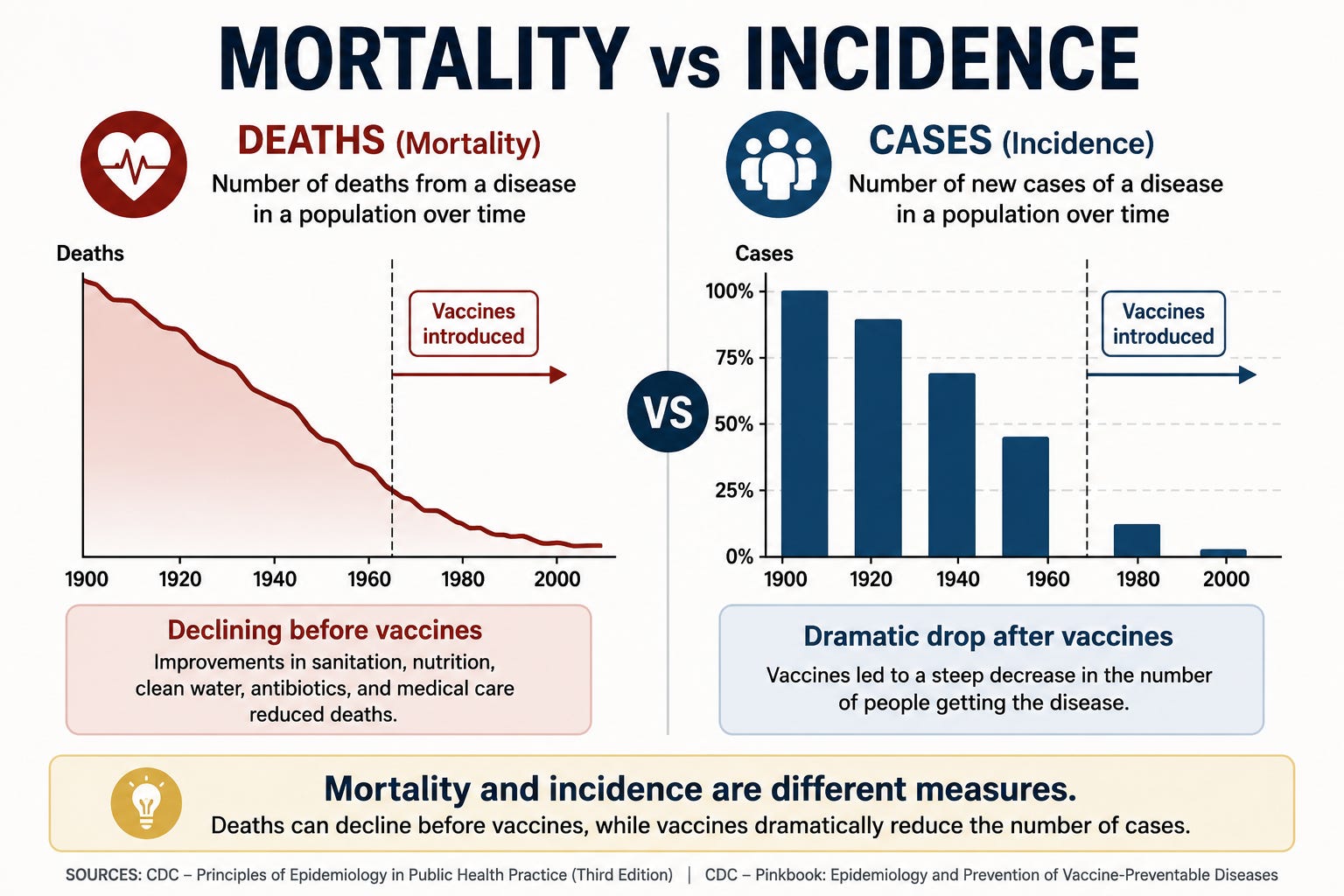
Before measles vaccination, improved medical care had made measles less deadly than it had been in the 19th century. It had not stopped millions of infections from occurring. Widespread vaccination produced a dramatic reduction in the number of measles cases themselves.
The same distinction applies to polio, rubella, invasive Haemophilus influenzae type b disease and other vaccine-preventable infections. Better living conditions can reduce complications and deaths without preventing transmission.
So it is fair to say vaccines were not solely responsible for historical declines in infectious-disease mortality. It is not accurate to conclude that they provided no additional reduction in illness, disability, or death.
How reliable is the “1.13 million deaths prevented” estimate?
Kory criticizes a CDC analysis estimating that routine childhood vaccination among children born from 1994 through 2023 will prevent approximately 508 million illnesses, 32 million hospitalizations and 1.129 million premature deaths over their lifetimes.
This is a modeled estimate, not a direct count of identifiable people who otherwise certainly would have died.
Modeling requires assumptions about:
pre-vaccine disease incidence;
vaccination coverage;
vaccine effectiveness;
case-fatality rates;
medical progress;
long-term complications;
future disease risk.
Those assumptions can and should be examined. Some inputs came from historical literature, surveillance systems, previous models and unpublished CDC data. Greater transparency and sensitivity analysis would help readers assess how much the result changes under different assumptions.
But Kory goes too far when he says no data sources were provided or that different disease-specific age groups demonstrate “cooking the books.”
The report identifies its included vaccines, modeling structure, and multiple data sources, including national immunization surveys, school vaccination surveys, vaccine pricing information, and established disease-burden models. Different diseases reasonably require different time horizons because their risks and complications occur at different ages. (CDC)
Readers may reasonably debate whether the model overestimates or underestimates the precise number of deaths prevented. That uncertainty does not validate Kory’s unsupported figure of 300,000 vaccine-killed infants.
The two estimates are not evidentially equivalent.
COVID-19 VAERS reports do not represent confirmed deaths
Kory concludes by citing AI-generated claims that tens of thousands of deaths were reported after mRNA COVID-19 vaccination, arguing that public-health authorities dismiss every report as unrelated.
That misunderstands VAERS.
During the COVID-19 vaccination program, healthcare providers were required to report deaths following vaccination even when causation was unknown. A VAERS report does not mean the vaccine caused the death. Investigators review medical records, death certificates, autopsies, and population data to determine whether a causal link exists. (CDC)
The safety system has identified genuine vaccine risks. For example, U.S. authorities recognized nine deaths caused by thrombosis with thrombocytopenia syndrome following the Johnson & Johnson/Janssen COVID-19 vaccine. Recognizing those cases while concluding that most VAERS death reports are not vaccine-caused is not contradictory—it reflects the difference between a reported event and a confirmed adverse reaction.
Finally, AI chatbots such as Grok or Perplexity are not primary sources. Claims about mortality should be verified using the underlying databases and official evidence.
What can fairly be concluded?
A fair assessment should avoid two extremes.
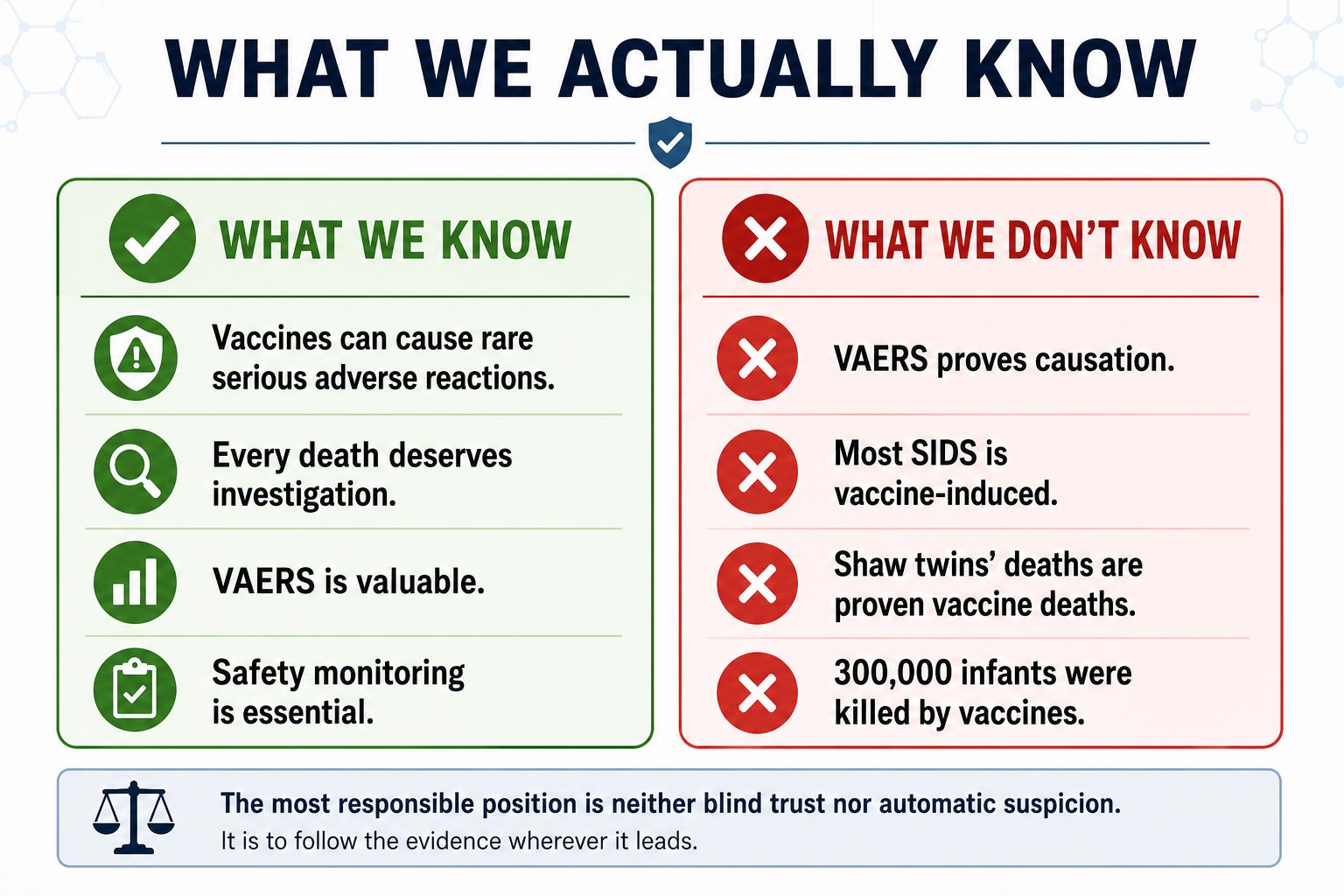
It would be wrong to say vaccines can never cause severe injury or death. Rare serious adverse reactions occur, and each credible report deserves investigation. Vaccine-safety systems must remain transparent, responsive and open to identifying unexpected risks.
It is equally wrong to assume that illness or death following vaccination was caused by it.
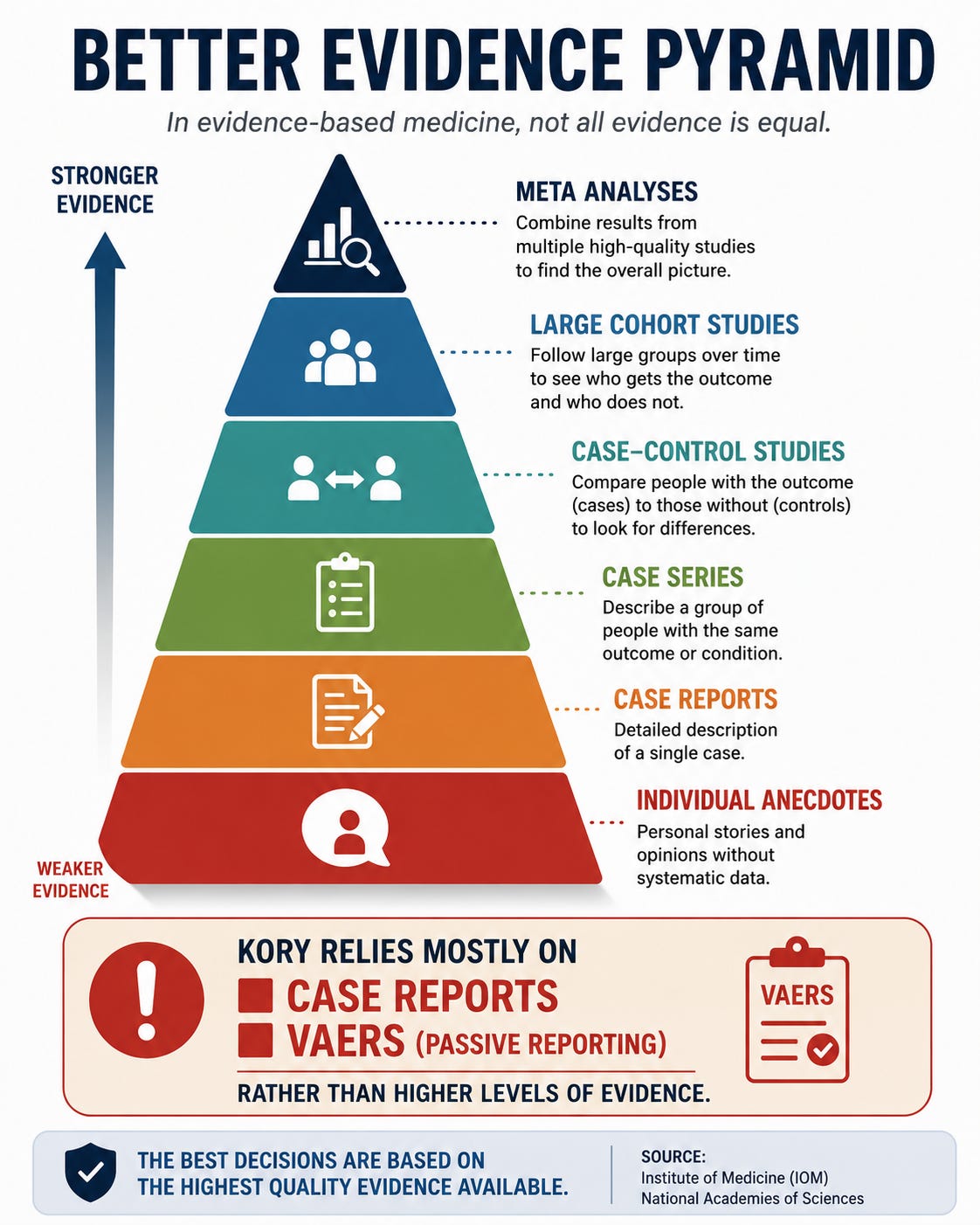
Kory’s article contains genuine clinical concerns, historical case reports and real VAERS statistics. But it repeatedly moves from timing to causation without supplying the evidence needed to make that leap.
Its most important weaknesses are:
classifying the deaths of 18-month-old children as part of a SIDS argument;
announcing a vaccine cause before complete forensic evidence was available;
using case reports as though they establish population-wide risk;
interpreting a passive-reporting database as a confirmed-death registry;
proposing microclots and brainstem injury without pathological evidence;
applying a generic underreporting estimate to deaths;
converting the resulting calculation into 300,000 alleged fatalities;
emphasizing preliminary studies while minimizing larger controlled studies that found no increased SIDS risk.
The evidence does not establish that routine vaccination caused the deaths of Dallas and Tyson Shaw or Sa’Niya Nelson.
It also does not support the broader claim that vaccination causes most SIDS or killed 300,000 American infants.
None of this means vaccine safety research is complete or that every question has been answered. It means that extraordinary claims require evidence that is at least as strong as the claims themselves.
The most responsible position is neither blind trust nor automatic suspicion. It is to investigate individual cases thoroughly, acknowledge real vaccine risks when evidence confirms them, and reject causal claims that extend beyond what the evidence can demonstrate.
The indictment paragraph should remain carefully worded because the criminal case is unresolved; it reports the allegation without treating it as proof of guilt.
Resources
The following resources provide the primary scientific literature, surveillance systems, and public health guidance referenced throughout this article.
CDC — Vaccine Safety
CDC — VAERS
CDC — Vaccine Safety Datalink
CDC — SIDS and Vaccination
CDC MMWR — Benefits of Routine Childhood Immunization
American Academy of Pediatrics — SIDS Policy Statement
National Academy of Medicine — Adverse Effects of Vaccines
Institute of Medicine — Immunization Safety Review
WHO — Measles Fact Sheet
NICHD SIDS research
VAERS Wonder Database
Vaccine Safety Datalink publications
Cochrane Library vaccine reviews
Peer-reviewed papers cited
Hoffman et al.
Baraff et al.
Walker et al.
Griffin et al.
Mitchell et al.
Roberts
Balci et al.
Huang et al.
Miller (2021)
Vennemann et al.
Fleming et al.
Government Resources
CDC Vaccine Safety
CDC VAERS
CDC MMWR
FDA Vaccine Safety
NIH
WHO