


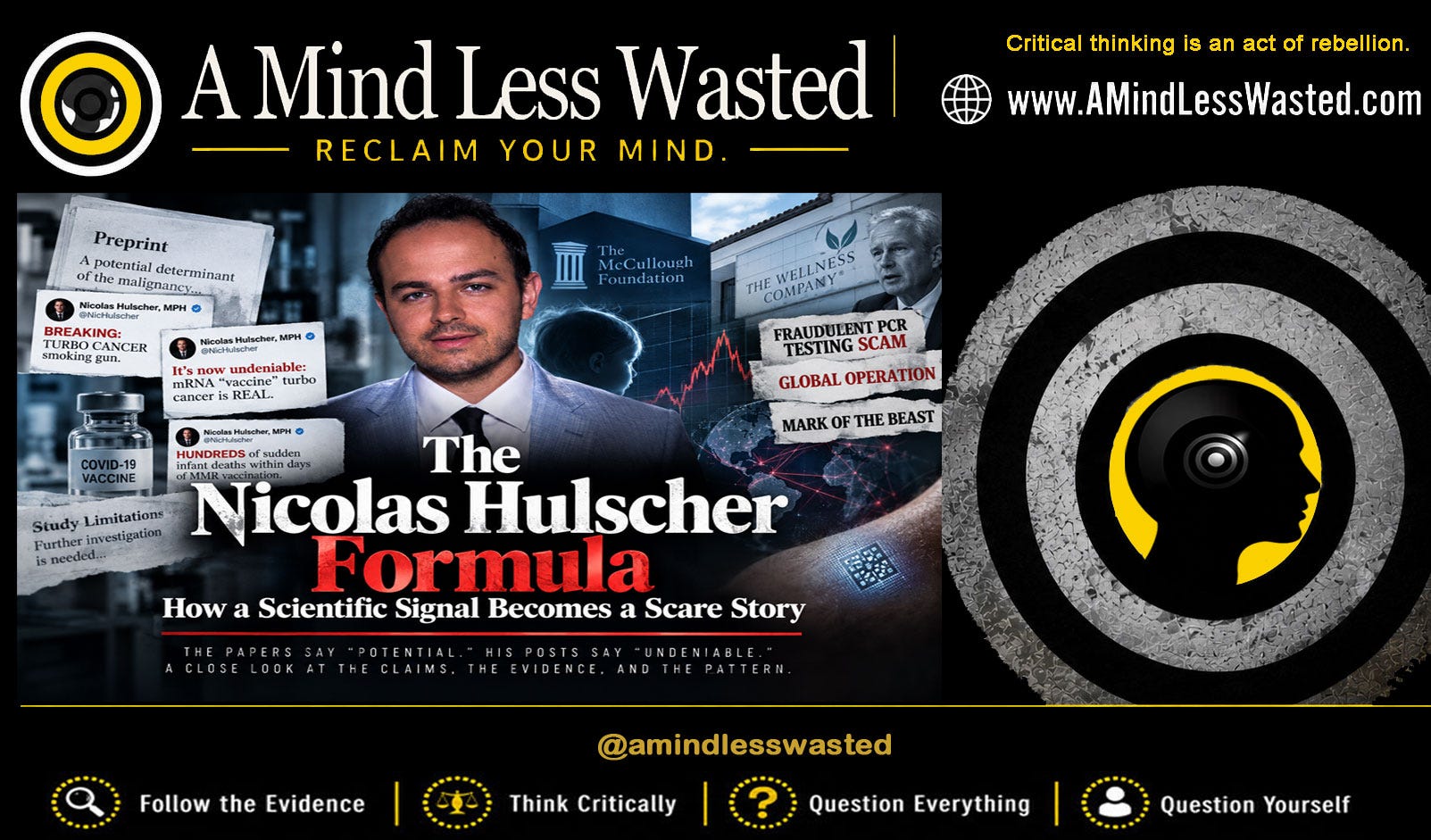
Spend a few days following Nicolas Hulscher, and a pattern begins to emerge: a preliminary association becomes a warning, a warning becomes a crisis, and by the time the finding reaches social media, much of the scientific uncertainty has disappeared.
BREAKING. BOMBSHELL. SHOCKING. STUNNING. EXPLOSIVE. SMOKING GUN. FRAUD. COVER-UP. LETHAL.
Those words were not collected by searching years of archived posts.
The examples examined here came from Hulscher posts dated largely between September 12 and September 18, 2026. This is not presented as a quantitative sample of everything he has ever published. It is a close examination of claims encountered within a remarkably short recent window, followed back to the papers, preprints, and datasets underneath them.
That distinction matters.
This article is not an argument that Nicolas Hulscher has no scientific credentials. He does. He earned an MPH in epidemiology from the University of Michigan in 2024. The McCullough Foundation identifies him as its epidemiologist and administrator and says he plays a leading role in scientific research, public communications and policy engagement, manages its social-media platforms, authors publications and presents research to public audiences.
Nor is the argument that every study he cites is worthless, every safety signal imaginary, or every public-health institution beyond criticism.
Some of the papers Hulscher highlights contain findings worth investigating.
The question is what happens between the scientific evidence and the headline.
Again and again, the language changes.
An association begins to sound like an effect.
An adverse-event report begins to sound like a confirmed vaccine death.
A hypothesis becomes a smoking gun.
A possible determinant becomes undeniable proof.
A dispute over pharmacovigilance becomes a cover-up.
Separate controversies in different countries become a coordinated global operation.
And a prototype for recording vaccination history becomes a future system determining who may shop, dine or travel.
The evidence is not merely summarized. It is amplified.
I also gave Nicolas Hulscher a direct opportunity to respond before publication. I sent him the central factual questions raised in this article, including the evidentiary basis for his broader claims, the way he characterizes preliminary or observational findings, and the specific sources supporting statements presented as established fact. As of publication, he had not responded. That silence does not prove the claims are false, but it does mean he declined an opportunity to clarify, correct, or defend them on the record.
How this review was done
For each example, I took Hulscher’s public claim and went back to the source, the paper, preprint, database, or institutional record, to see what the evidence actually showed. I compared his wording with the study design, results, limitations, and authors’ conclusion. Where passive-surveillance data such as VAERS were involved, I checked the interpretation guidance issued by the agencies that operate the system. I checked commercial relationships against published financial disclosures and current company product pages.
That is important because the standard applied here is simple:
If a headline is stronger than the evidence beneath it, the difference should be visible.
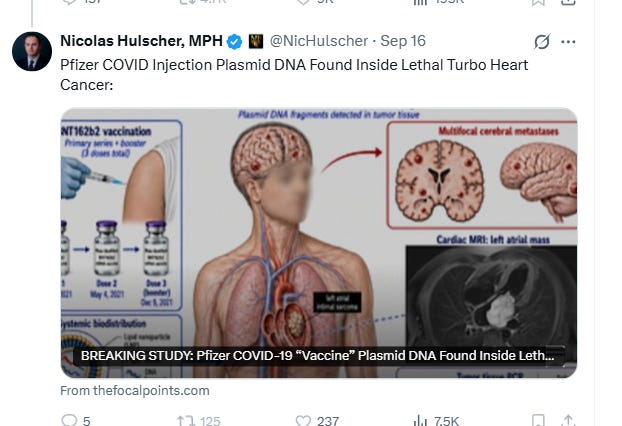
Exhibit 1: His scientific paper says “potential.” His social media says “undeniable.”
In September 2026, Hulscher and six coauthors uploaded a preprint describing a 35-year-old man with an aggressive cardiac intimal sarcoma following COVID-19 vaccination.
The authors reported detecting DNA sequences they attributed to Pfizer vaccine-manufacturing plasmid material in archived tumor tissue. The case is unusual. The finding is worth investigating.
It is also one patient.
Zenodo identifies the paper as a preprint. The manuscript describes primary cardiac intimal sarcoma itself as an exceedingly rare and aggressive cancer and discusses vaccination as a potential determinant, rather than demonstrating that vaccination caused the malignancy.
Hulscher’s public wording was markedly stronger.
In the posts reviewed for this article, he called the case the “TURBO CANCER smoking gun,” said it made vaccine-related turbo cancer “undeniable,” and said the study “obliterates” the claim that turbo cancer is a myth.
But the evidence had not changed between manuscript and social-media post.
The sample was still one patient. There was no control group.
There was no population comparison demonstrating that vaccinated people develop cardiac intimal sarcoma at a greater rate.
And detecting reported sequences in extracted tumor tissue does not, by itself, establish genomic integration into malignant cells or demonstrate that those sequences caused or accelerated the tumor.
That difference can be expressed in three words:
potential → smoking gun → undeniable
That is not simply simplification for a general audience.
It is an increase in certainty.
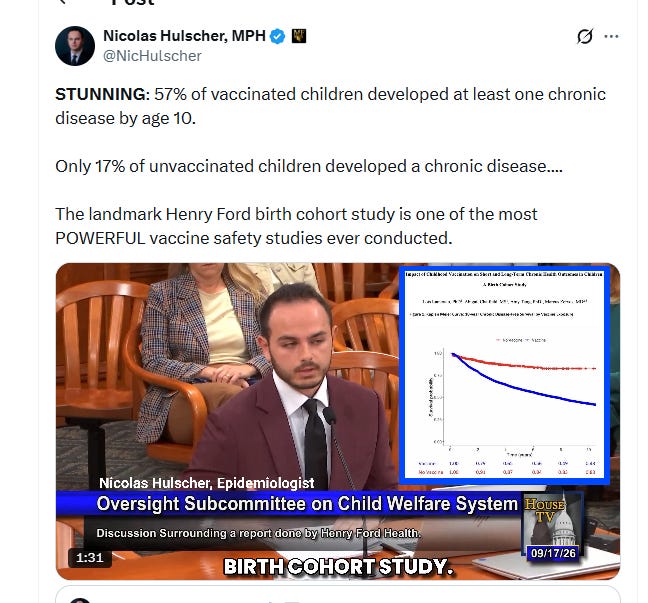
Exhibit 2: A draft Henry Ford says failed internal review becomes one of the “most POWERFUL” vaccine studies ever conducted
Hulscher also promoted a vaccinated-versus-unvaccinated childhood analysis originating at Henry Ford Health.
His headline statistic was memorable:
57% of vaccinated children developed at least one chronic condition, compared with 17% of unvaccinated children.
He called the birth-cohort analysis one of the “most POWERFUL vaccine safety studies ever conducted.”
Henry Ford Health describes the document very differently.
According to the health system, the analysis was a 2020 draft that was shelved after its first internal review because of serious problems with its data and methodology. Henry Ford says the unvaccinated cohort was substantially smaller and differed demographically from the vaccinated cohort. Most importantly, follow-up was dramatically different: about one quarter of the unvaccinated children were observed only through six months of age, and 75% only through age three.
That is a serious problem when the outcome being counted is the accumulation of chronic diagnoses throughout childhood.
Children who remain in a healthcare system longer have more opportunity to receive diagnoses than children who disappear from observation earlier.
Hulscher subsequently promoted crude proportional comparisons across numerous categories, including enormous relative increases and several disorders described as appearing “ONLY IN VACCINATED.”
Large relative percentages are emotionally powerful. They can also become unstable when numbers are small, and they are especially difficult to interpret when the populations being compared contribute substantially different amounts of follow-up time.
The same problem appears in Hulscher’s cancer framing. He highlighted a claimed 54% relative increase in cancer and then discussed possible mechanisms involving DNA fragments and formaldehyde.
But the Henry Ford dataset did not test whether DNA fragments caused insertional mutagenesis in those children.
It did not establish formaldehyde as a cancer mechanism in the cohort.
Those are proposed mechanisms layered onto an observational comparison already affected by serious follow-up and cohort differences.
The progression is recognizable:
problematic comparison → dramatic percentage → causal implication → proposed molecular mechanism
That is considerably more persuasive to an audience than the actual state of the evidence.
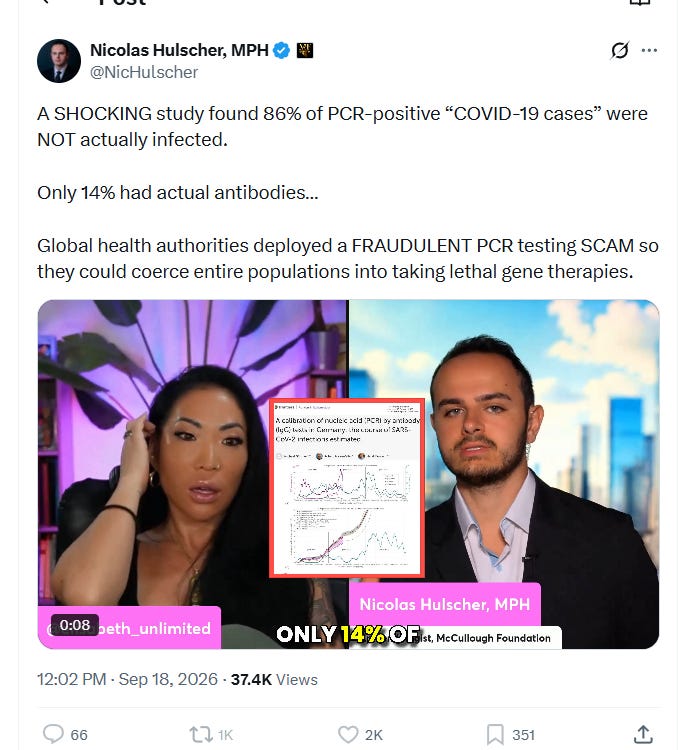
Exhibit 3: A mathematical model becomes a public-health fraud
Another Hulscher headline announced:
“BREAKING: 86% of PCR-Positive ‘COVID Cases’ Were Not Real Infections.”
The underlying paper is real and deserves to be described accurately.
Researchers published a 2025 analysis in Frontiers in Epidemiology comparing aggregate German PCR positivity with aggregate IgG seroprevalence. Using a least-squares model, the authors estimated a scaling factor of approximately 0.14. They interpreted this value as indicating that roughly one in seven PCR-positive individuals represented a true infection.
So the provocative 14% interpretation did not originate with Hulscher.
That needs to be acknowledged.
But the study was not a patient-by-patient validation experiment in which researchers independently evaluated thousands of PCR-positive people and discovered that 86% were false-positive cases. It modeled aggregated population-level time series. The authors themselves list the aggregated nature of the data among the study’s limitations.
Hulscher then went considerably beyond even the paper’s provocative interpretation.
His presentation characterized PCR testing as a “FRAUDULENT PCR testing SCAM” and alleged that health authorities used it to frighten populations into accepting vaccination.
His longer commentary described the episode as potentially one of the greatest public-health frauds ever committed.
But the mathematical analysis did not investigate whether governments knowingly committed fraud.
It did not investigate policymakers’ motives. It did not demonstrate that health authorities intentionally used false testing to create fear.
That is the crucial distinction.
The authors made a controversial epidemiological inference.
Hulscher added intent, fraud and coercion.
The progression becomes:
model → contested inference → fraud → deliberate coercion
The final steps are not results produced by the model.
Exhibit 4: VAERS death reports become evidence that MMR is “quite lethal”
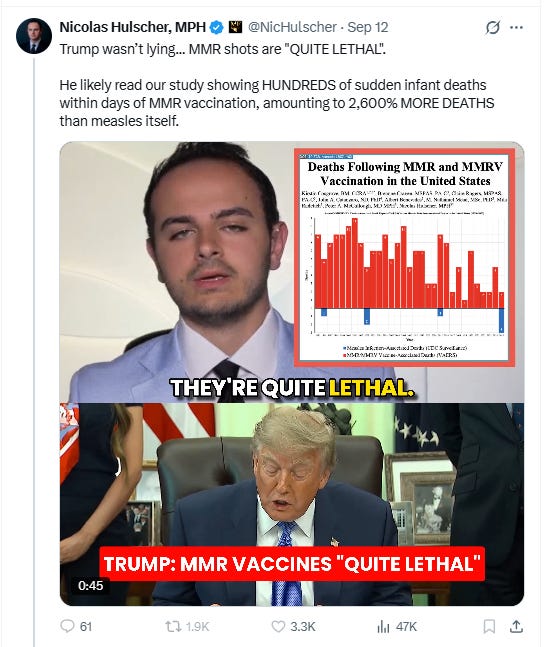
One of the clearest examples involves the Vaccine Adverse Event Reporting System.
Hulscher coauthored a 2026 preprint examining VAERS reports after MMR and MMRV vaccination.
The paper identified 299 U.S. death reports in its analytical cohort. Of those, 193 reports with identifiable dates occurred since 1995. The authors compared those 193 reports with seven measles-associated deaths and described the vaccine-report count as 2,657% higher.
Hulscher promoted the work by saying MMR vaccines were “quite lethal” and referring to “HUNDREDS of sudden infant deaths.”
There are two major problems.
First, VAERS is not a database of events already determined to have been caused by vaccination.
CDC states plainly that VAERS accepts reports even when the reporter is unsure whether the vaccine caused the event, and that a report alone does not establish causation. CDC also warns that report counts cannot generally be used by themselves to calculate risk or frequency.
The CDC’s VAERS interpretation guide goes further: presenting VAERS reports as verified vaccine deaths or injuries misrepresents the nature of the system.
So comparing:
193 deaths reported after vaccination
with
seven deaths attributed to measles
does not create a valid vaccine-versus-disease mortality comparison.
The numerators represent different things.
There is also a problem with the phrase “hundreds of sudden infant deaths.”
The preprint reports 299 U.S. death reports overall, but says SIDS or sudden unexplained death represented 24% of the reports, not hundreds of them.
In other words, even the preprint’s own category breakdown does not support describing all or most of those reports as sudden infant deaths.
The paper itself ultimately acknowledges the central unresolved issue. Its authors call for record-linked datasets capable of assessing background mortality and determining causal relationships.
That is exactly what VAERS alone cannot do.
Yet the public message becomes:
report after vaccination → vaccine death → MMR is “quite lethal”
The noun changes.
And with it, the meaning.

What has actually been established?
At this point, the pattern does not prove that every Hulscher claim is wrong. It does not prove that he intentionally deceives his audience. It does not tell us his private motives.
What it does establish is narrower and more defensible.
In multiple examples collected within a short period, Hulscher’s public language becomes more causal, more certain or more dramatic than the evidence underneath it.
A one-patient preprint becomes “undeniable.”
A draft rejected by its originating health system becomes “powerful” evidence.
An aggregate statistical model becomes deliberate fraud.
VAERS reports become vaccine deaths.
The issue is not that scientific uncertainty exists.
The issue is what happens to that uncertainty when the story reaches the public.
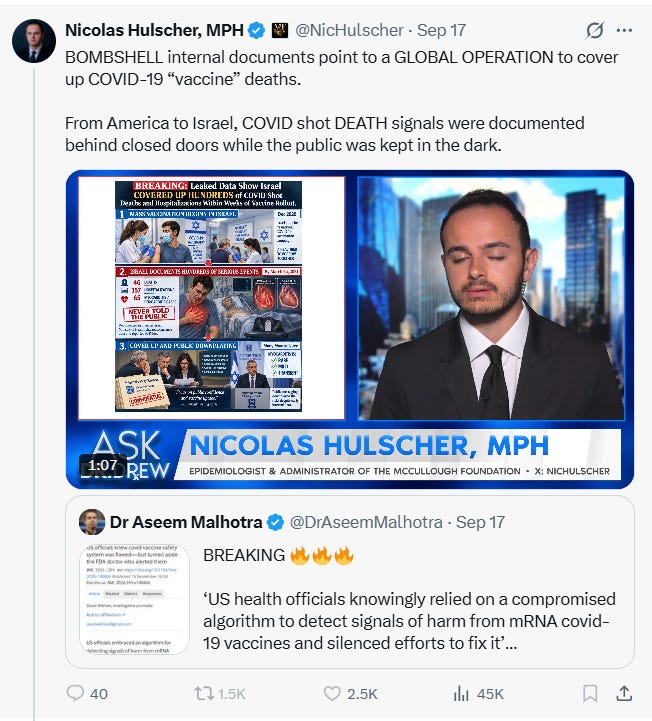
Exhibit 5: A legitimate pharmacovigilance controversy becomes a “coordinated GLOBAL OPERATION”
This example requires balance because there is a legitimate underlying story.
A September 2026 paper examining Israeli pharmacovigilance records reported an anonymized dataset containing 531 hospitalization records and 67 unique deaths reported to Pfizer between March 2021 and May 2022. It found substantial numbers of myocarditis and pericarditis reports and argued that the emerging cardiac safety signal was communicated publicly only after approximately three to four months.
That deserves scrutiny.
Adverse-event surveillance should be transparent.
Safety signals should be investigated quickly.
Risk communication should be accurate.
But Hulscher moves from those propositions to something much larger.
He described the records as evidence of vaccine deaths being covered up and linked the Israeli controversy to disputes over U.S. surveillance, saying the concealment appeared to constitute a “coordinated GLOBAL OPERATION.”
Those are different evidentiary claims.
The Israeli dataset documents deaths reported to Pfizer. It does not establish that all 67 were caused by vaccination.
And showing serious pharmacovigilance problems in two countries does not, by itself, demonstrate coordination between those countries.
A coordinated international operation requires evidence of coordination: communications, directives, shared planning, common participants or some comparable connective mechanism.
Without that evidence:
two controversies remain two controversies.
The progression here is:
safety signal → communication failure → cover-up → global coordination
Each step requires additional evidence.
The rhetoric arrives before that evidence does.
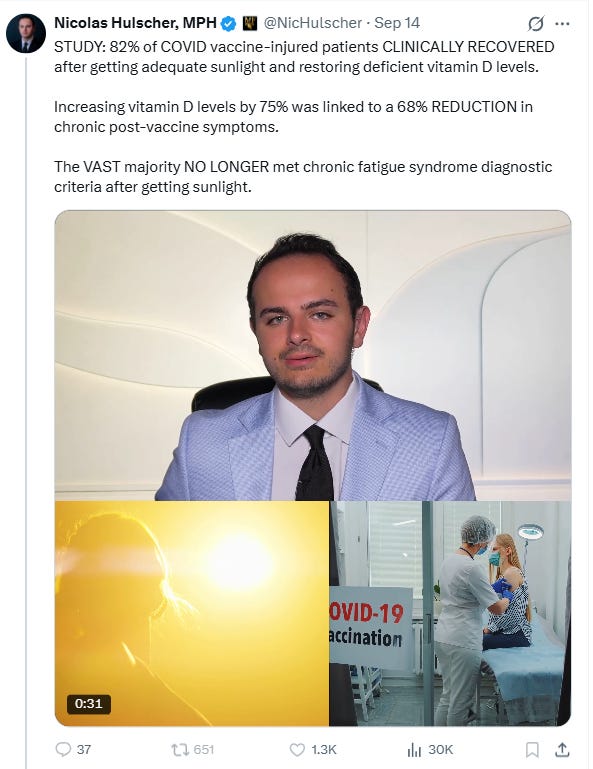
Exhibit 6: “No longer met diagnostic criteria” becomes “82% clinically recovered”
The amplification can run in the opposite direction when the subject is a treatment.
A 2025 study examined 28 patients who developed ME/CFS following COVID-19 vaccination. Twenty-seven had vitamin D deficiency or insufficiency. The intervention included dietary counseling, sun-exposure recommendations and oral vitamin D supplementation.
After treatment, 23 of 28 patients—82%—no longer met the study’s ME/CFS diagnostic criteria.
That is an interesting finding.
But it was a retrospective uncontrolled study.
There was no untreated comparison group.
The authors concluded that vitamin-D replacement “may lead to symptomatic relief” and said they were preparing a randomized controlled trial to evaluate efficacy.
Hulscher’s version was:
“82% of COVID vaccine-injured patients CLINICALLY RECOVERED.”
Those statements are not identical.
Falling below a diagnostic threshold does not necessarily mean complete clinical recovery.
Twenty-eight patients selected for a specific post-vaccination ME/CFS syndrome are not equivalent to the much broader category of all “vaccine-injured patients.”
And an uncontrolled before-and-after study cannot isolate the treatment effect from spontaneous improvement, regression to the mean, concurrent care or other influences.
This is revealing because the certainty works both ways.
When preliminary evidence suggests harm, the public language may become very certain.
When preliminary evidence supports a favored intervention, certainty can appear there too.
The deeper pattern is therefore not simply pessimism.
It is asymmetric certainty.
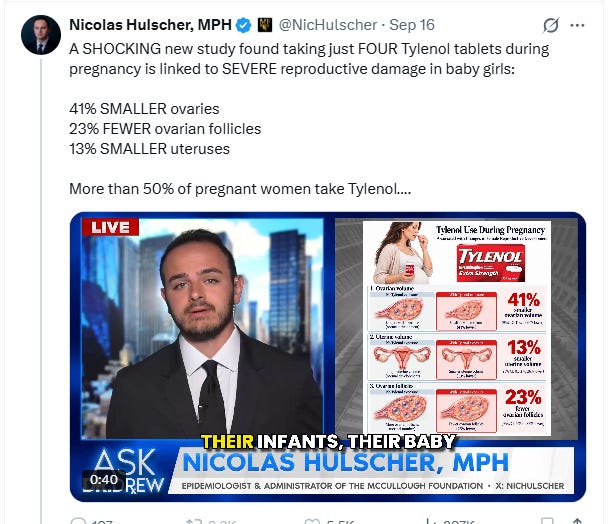
Exhibit 7: A serious paracetamol finding becomes a broader fertility implication
This is an important example because the underlying research should not be dismissed.
The 2026 COPANA study published in Human Reproduction Open was a prospective observational cohort. Researchers enrolled pregnant women, assessed paracetamol exposure using maternal reports and urinary measurements, and examined 302 infant girls. They reported associations involving ovarian volume, follicle count, uterine volume and reproductive markers. They also found related outcomes in an independent confirmatory cohort followed into adolescence. Some analyses suggested dose-response patterns.
This is substantive research.
It deserves follow-up.
Hulscher highlighted findings including approximately:
41% smaller ovarian volume,
23% fewer follicles,
13% smaller uterine volume.
Those numbers come from the study.
The problem is not that the numbers were fabricated.
It is the implication created around them.
The paper does not establish that girls exposed prenatally to paracetamol will be infertile.
The researchers explicitly say that the observational design cannot establish causality and that the long-term clinical significance, including effects on reproductive lifespan, remains uncertain.
That qualification is central.
A difference in ovarian morphology is not the same outcome as infertility.
A smaller uterine volume at one developmental stage is not proof that a girl will later be unable to conceive.
This example demonstrates a subtler form of amplification.
Nothing needs to be literally fabricated.
The framing can do the work.
Put the largest percentages in red.
Put the widespread use of Tylenol next to them.
Leave the uncertainty about actual future fertility in smaller print—or outside the headline entirely.
Readers can be led toward a conclusion the study itself has not yet established.
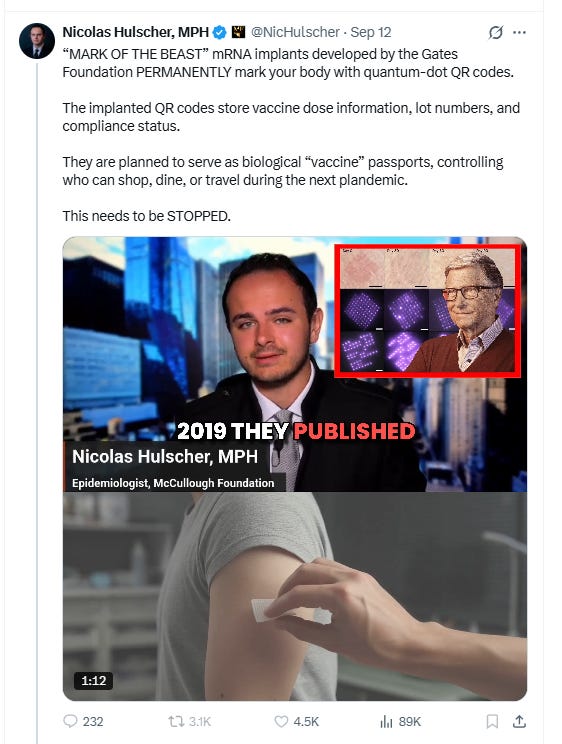
Exhibit 8: A medical-record prototype becomes the “MARK OF THE BEAST”
In 2019, researchers published an experimental system for recording vaccination history using biocompatible near-infrared quantum dots delivered into the skin by microneedle patches.
The purpose was straightforward: maintaining vaccination records can be difficult in low-resource settings without reliable centralized medical databases. The quantum-dot patterns were invisible to the naked eye and readable using near-infrared imaging. The paper reported resistance to simulated sunlight exposure equivalent to approximately five years.
Hulscher presented the project as:
“MARK OF THE BEAST” mRNA implants
that would “PERMANENTLY” mark the body with quantum-dot QR codes and were planned to become biological vaccine passports controlling who could shop, dine or travel during a future pandemic.
The original research establishes none of those social-control claims.
The technology was not a conventional consumer QR code.
The experiment did not establish permanent lifetime marking.
Five-year-equivalent photostability testing is not permanence.
And the research paper did not describe a government program for controlling entry to restaurants, stores or transportation.
This is a different type of amplification:
prototype → hypothetical future application → presumed plan → dystopian certainty
Or, more simply:
could becomes will.
The vocabulary is part of the message
Now return to the words appearing across these examples:
BREAKING.
BOMBSHELL.
SHOCKING.
STUNNING.
EXPLOSIVE.
SMOKING GUN.
UNDENIABLE.
FRAUD.
SCAM.
COVER-UP.
LETHAL.
GLOBAL OPERATION.
MARK OF THE BEAST.
Scientific papers often use less exciting language:
associated with.
may.
possible.
requires confirmation.
limitations.
cannot establish causality.
Those qualifications are not defects.
They are the mechanisms by which researchers separate what they observed from what they think might explain it.
In the examples examined here, that machinery repeatedly runs in the opposite direction as the findings move into Hulscher’s public communication.
Uncertainty shrinks.
The verbs strengthen.
Relative differences become headlines.
Possible mechanisms become explanations.
Signals become conclusions.
By the end, something requiring investigation can sound like something already proven.
The McCullough commercial context
This portion requires particular care because association is not proof of motive.
There is no evidence presented here that Nicolas Hulscher personally receives revenue from The Wellness Company’s supplement sales, and this article does not allege that he does.
But there is a relevant institutional and commercial context.
Hulscher works for the McCullough Foundation and, according to the foundation, plays a major role in both its research and its communications.
Peter McCullough, the foundation’s president, has publicly disclosed another relationship.
In a published article, McCullough disclosed that he receives partial salary support and holds an equity position in The Wellness Company, which markets dietary supplements.
The Wellness Company currently markets an Ultimate Spike Detox built around the “McCullough Protocol.” Its product page says the formula is intended to remove harmful spike proteins, markets it to people experiencing problems after COVID or vaccination, and lists a one-time price of $89.99 or $80.99 under subscription pricing at the time this article was checked.
The company also sells a six-month Ultimate Spike Detox + Testing System for $539.99, including before-and-after antibody testing. Notably, the company’s own page cautions that a change between the two tests does not, by itself, prove that the product caused the change.
That caveat is revealing in the context of this article.
The commercial relationship does not establish why Hulscher communicates as he does.
It does, however, create a financial context readers should know about when vaccine-injury and persistent-spike narratives circulate within a professional ecosystem whose most prominent figure has an equity interest in a business marketing products to people concerned about those problems.
That is not guilt by association.
It is disclosure.
Readers can decide what significance to attach to it.
Some of the signals are real
Any fair examination of Hulscher’s work has to acknowledge something else.
Real vaccine adverse effects exist.
Real pharmacovigilance failures can occur.
Government agencies make mistakes.
Drug companies deserve scrutiny.
Researchers should challenge assumptions.
Unpopular hypotheses should not be dismissed merely because they are unpopular.
And a paper does not become wrong because Nicolas Hulscher shares it.
The problem arises when the distinctions necessary for evaluating evidence collapse:
signal versus causation;
report versus confirmed injury;
association versus mechanism;
hypothesis versus established fact;
institutional failure versus coordinated conspiracy.
Skepticism works only when it is applied consistently.
Including to the people selling skepticism.
Less than a week
Perhaps the most striking thing about this examination is how little archival digging it required.
The examples above came from posts appearing within roughly a September 12–18, 2026 window, along with the papers and articles those posts referenced.
They are not presented as a statistical analysis of Hulscher’s entire output.
But within that short span we encountered claims about:
vaccination and childhood chronic disease;
vaccination and “turbo cancer”;
PCR testing and public-health fraud;
MMR and supposedly massive vaccine mortality;
an alleged coordinated international vaccine-death cover-up;
vitamin D and an 82% “clinical recovery” rate;
prenatal Tylenol and reproductive development;
and quantum-dot technology portrayed as the “Mark of the Beast.”
At some point the individual topic stops being the whole story.
The recurring transformation becomes the story.
What happens when you challenge it?
During this review, I challenged Hulscher’s claims on X.
He blocked my account.

That screenshot establishes only that fact. It does not establish that Hulscher blocks every critic, that he systematically removes dissent, or that the block had any particular motive.
It should not be stretched beyond what it proves.
But scientific claims themselves should be capable of surviving scrutiny whether or not their authors choose to engage with critics.
If a claim is supported by strong evidence, disagreement does not weaken that evidence.
It creates an opportunity to show it.
Read the paper. Then read the headline.
The most useful response to this kind of scientific communication is surprisingly simple.
Open the study.
Find out who was actually studied.
Find the control group.
Look at the raw numbers.
Look at the absolute difference as well as the relative difference.
Check whether follow-up was comparable.
Ask whether the study was randomized, prospective, retrospective or purely observational.
If a surveillance database is being used, determine whether its reports have been causally adjudicated.
Find the limitations section.
Ask whether the proposed mechanism was measured or merely hypothesized.
Then read the authors’ conclusion.
Only after that should you return to the headline.
And ask:
How much did the certainty grow between the paper and Nicolas Hulscher’s post?
In the examples examined here, the answer is repeatedly:
a great deal.
That—not any single vaccine, paper, drug, statistic or controversy—is the central finding.
The signal may be scientific.
The fear is added later.
Resources and primary sources
Nicolas Hulscher / McCullough Foundation: The foundation’s own biography describes Hulscher’s MPH, his epidemiology role and his responsibilities for scientific research, public communications and social media. McCullough Foundation — Nicolas Hulscher biography
Henry Ford vaccinated-vs.-unvaccinated draft: Henry Ford Health explains why it says the 2020 draft failed internal review, including cohort imbalance and dramatically shorter follow-up among unvaccinated children. Henry Ford Health — Vaccine Study Fact Check
Cardiac intimal sarcoma / “turbo cancer”: Hulscher and colleagues’ September 2026 Zenodo preprint involving one 35-year-old patient. Zenodo — Fatal Cardiac Intimal Sarcoma case report
PCR/IgG analysis: The original 2025 Frontiers in Epidemiology paper behind the 14%/86% claim. Frontiers — Calibration of PCR by IgG tests in Germany
MMR/MMRV death-report preprint: The 2026 Zenodo preprint based on VAERS reports, including its 299 U.S. reports, 24% SIDS/sudden-unexplained-death category and 2,657% comparison. Zenodo — Deaths Following MMR and MMRV Vaccination in the United States
How VAERS should be interpreted: CDC’s current guidance explains that reports are accepted regardless of whether vaccination caused the event and cannot alone establish causality or rates. CDC — About VAERS
CDC VAERS data warning: CDC WONDER explicitly cautions that treating VAERS reports as verified vaccine deaths or injuries misrepresents the database. CDC WONDER — VAERS interpretation guidance
Israeli pharmacovigilance: The September 2026 EXCLI paper analyzing 531 hospitalization records and 67 unique deaths reported to Pfizer and discussing the myocarditis communication timeline. EXCLI Journal — Israeli pharmacovigilance study
Vitamin D / post-vaccination ME/CFS: The PubMed record for the retrospective 28-patient study in which 23 patients no longer met ME/CFS diagnostic criteria after vitamin-D replacement therapy. PubMed — Vitamin D replacement study
Paracetamol / COPANA: The peer-reviewed 2026 prospective cohort examining prenatal paracetamol exposure and ovarian and uterine development. Human Reproduction Open — COPANA study
Quantum-dot vaccination records: The original 2019 Science Translational Medicine research describing near-infrared quantum dots delivered through microneedle patches for vaccination recordkeeping. PMC — Biocompatible near-infrared quantum-dot vaccination record study
McCullough financial disclosure: McCullough’s published disclosure states that he receives partial salary support and holds an equity position in The Wellness Company. Published McCullough disclosure
The Wellness Company — Ultimate Spike Detox: Current marketing, pricing and claims surrounding the McCullough Protocol product. Ultimate Spike Detox
Six-month detox/testing program: Current $539.99 program combining supplements and before-and-after spike-antibody testing; the page itself cautions that changes between tests do not prove the supplement caused them. Ultimate Spike Detox + Testing System